F&V exports are expanding rapidly in volume, but value growth remains more constrained

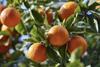
Albanian mandarins

Image: Pellumb Qosej

Albania’s agricultural exports recorded strong growth during the first ten months of 2025, with double-digit increases in both volume and value. Over the past five years, total exported food volumes have risen from around 905,000 tonnes in 2021 to approximately 1.1mn tonnes in 2025, representing an increase of 21.6 per cent.

Export values followed an upward trajectory, peaking in 2023 at L79bn (around €660mn) before easing slightly and stabilising at approximately L75bn (€625mn) in 2025. Despite this positive trend, growth remains unbalanced, with higher volumes not yet translating into proportional gains in value or long-term sustainability for the sector.

Agriculture continues to play a central role in Albania’s economy, contributing an estimated 18-20 per cent of GDP, employing around 40-45 per cent of the population and accounting for roughly 8-11 per cent of total exports. Within this framework, fruit and vegetables are a key driver, representing about 20 per cent of total agricultural output and as much as 36 per cent of agricultural exports.

As export markets expand, Albanian fresh produce is increasingly well positioned in the EU, particularly in categories where the country enjoys clear comparative advantages. Tomatoes, cucumbers, nuts, fresh fruit, watermelons and processed olives remain among the most competitive products, benefiting from favourable climatic conditions, relatively low production costs and geographical proximity to European markets.

The sector is characterised by a pronounced dualism. On one side is an export-oriented segment, dominated by larger, modern farms that are integrated into European supply chains and supported by long-term contracts and international certifications. On the other is a more traditional structure of small family farms with limited financial support, many of which are gradually scaling back production or exiting the sector altogether.

This divide has strengthened Albania’s role as a supplier to specialised export segments, while the domestic market has become increasingly dependent on imported fruit and vegetables.

The strongest export growth has been recorded in EU markets, where imports of Albanian agricultural products have increased sharply over the last five years. Between 2021 and 2025, Germany saw growth of around 97 per cent, Poland 106 per cent, Romania 66 per cent and Sweden as much as 145 per cent, pointing to a steadily improving presence of Albanian fruit and vegetables across northern and central Europe.

Within the region, Serbia remains the main destination for vegetables, accounting for roughly 21 per cent of exports in this category. By contrast, exports to Kosovo have declined by around 9.5 per cent, while North Macedonia has seen a sharper fall of approximately 24 per cent, highlighting a gradual loss of momentum in neighbouring traditional markets.

Italy, historically one of Albania’s most important destinations for agricultural produce, has recorded a significant decline of around 38 per cent, signalling increased competition and ongoing price pressure. Montenegro remains the only market with a consistent trade surplus for Albania, albeit with more moderate growth compared with EU destinations.

On the positive side, the sector has benefited from strong growth in export volumes, improved access to EU markets and increased investment in modern greenhouses, irrigation systems, cold storage capacity and international certification. Long-term contracts with export companies have brought greater stability for larger producers.

However, structural weaknesses remain evident. Exports are still dominated by relatively low-value products, such as basic vegetables, which continue to weigh on average prices per kilogram. Small-scale growers face limited access to subsidies and high post-harvest losses, while food imports continue to rise, underlining the fragility of the domestic supply base.

Albania’s favourable climate and proximity to underdeveloped regional markets provide solid foundations for further growth in fruit and vegetables. Recent developments reflect a gradual diversification of agricultural investment and improvements in value chains, linking local growers more closely to international markets. To fully unlock this potential, however, targeted investment in infrastructure, technology and logistics remains essential.

There is no doubt that Albania’s agricultural exports are expanding rapidly in volume, however value growth remains more constrained. This confirms that growth is being driven more by quantities than by higher value-added.

Fruit and vegetables remain strategic for the Albanian economy, accounting for more than a third of agricultural exports and around one-fifth of total agricultural output. A gradual shift towards higher-value products, deeper processing, stronger quality standards and clearer market positioning will be critical to improving the balance between volume and value. With the right policy framework and continued investment, Albania’s fruit and vegetable sector has the potential to move beyond volume-led growth and strengthen its position as a reliable supplier to European markets.