Producers secured new contracts and direct retail deals at Fruit Logistica, but structural challenges could undermine sector’s hard-won momentum
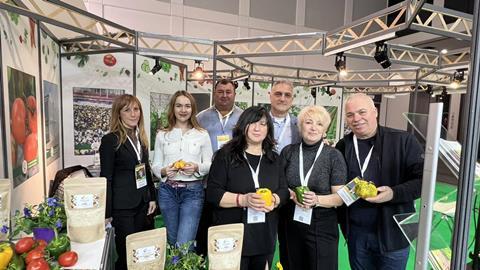
When the Bulgarian Greenhouse Growers Association (BGGA) packed up its stand at the 33rd edition of Fruit Logistica in early February, it left Berlin with something more valuable than brochures and business cards: concrete supply agreements and a growing conviction that the country’s greenhouse sector occupies a strategically important position in reshaping Europe’s fresh produce trade.
The BGGA group stand in Berlin brought together four Bulgarian producers, Ekofruit K&K, farmer Todor Genov, Dave-2007, and farmer Petya Nanovska, with their presence co-funded by Bulgaria’s Ministry of Agriculture and Food and the State Fund for Agriculture.
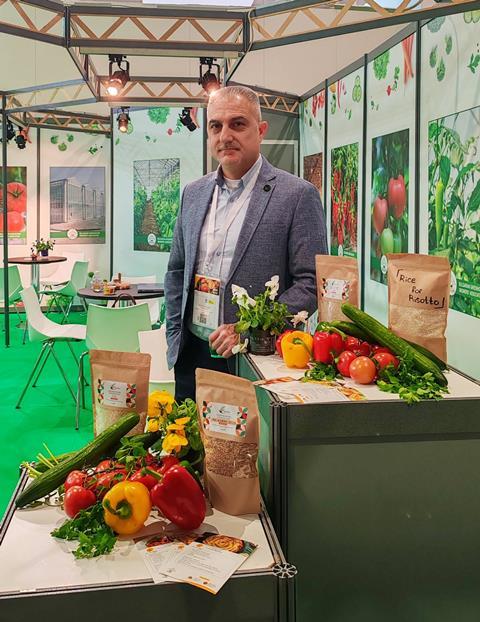
The stand attracted traders from the UK, Czech Republic, Poland and other European markets looking for reliable supplies of winter vegetable. Highlighted on the stand were Bulgaria’s pink beef tomatoes, fresh cucumbers, peppers and leafy vegetables.
“We have a real opportunity to capitalise on the supply shortfall from traditional providers such as the Netherlands and Spain, which are finding it increasingly difficult to guarantee year-round deliveries,” said BGGA chairman Marin Genurov. “This is redirecting demand towards more southerly countries, and Bulgaria fits that profile.”
According to BGGA, Fruit Logistica gave Bulgarian producers the chance to agree supply terms directly with buyers, bypassing the network of intermediaries that have traditionally squeezed margins for smaller producers. For a sector that has spent years navigating unfavourable import competition and weak domestic demand, direct access to export markets represents a meaningful change of dynamic.
“Additional markets will allow us to offset the gap in sales against imported produce and plan our production within the timelines the market demands,” Genurov noted. “When we are united around quality, Bulgarian producers can participate on equal terms in international markets and offer competitive produce that meets the highest standards.”
Long traditions, fragile foundations
Bulgaria has long-standing traditions in vegetable production, but a chronic shortage of agricultural labour, driven by decades of migration to western Europe and the physical demands of greenhouse labour, has left the sector exposed.
Tomato output alone has fallen sharply over the past two decades, from around 470,000 tonnes in the late 1990s to a fraction of that figure today. Pepper production tells a similar story.
Intensifying import competition from third countries has suppressed domestic farm-gate prices, while the energy cost shock triggered by the war in Ukraine hit heated greenhouse operations with particular severity, prompting many producers to abandon winter growing cycles entirely rather than absorb losses.
The consequences of that withdrawal from winter production are still reverberating. Once Bulgarian producers stepped back from the cold-season market, the gap was rapidly filled by imported vegetables, often at higher prices. Meanwhile, neighbouring countries including Greece, Turkey and North Macedonia have continued to invest heavily in their greenhouse sectors and now exert considerable competitive pressure on what remains a relatively small Bulgarian market.
Genurov has called for the Bulgarian government to move beyond promises and deliver structural support. The association is demanding stronger backing through support for cooperative structures, effective traceability across the food chain,and firmer market regulation. These are measures it says are essential if Bulgaria’s vegetable sector is to compete on equal terms within Europe. The European funds available to the greenhouse production sector have long been considered insufficient relative to the sector’s energy intensity and its dependence on manual labour that cannot readily be mechanised.
The natural conditions for production – the soil, the climate, the accumulated knowledge – remain in place. What the sector needs, industry leaders argue, is a properly constructed strategy from the Ministry of Agriculture and Food that translates those natural advantages into a stimulating environment for investment and production growth.