Coag highlights “critical situation” following storm Leonardo – the latest in a series of weather fronts to lash southern Spain
The Coordinator of Farmers and Livestock Organisations of Almería (Coag) is appealing to European retailers and distributors to maintain price stability and avoid putting commercial pressure on the region’s growers following the significant drop in vegetable production caused by recent storms.
It warned of a “critical situation” following storm Leonardo – the latest in a series of weather fronts to lash southern Spain – and said supply will not be able to recover in the short term due to the extensive damage inflicted by strong winds and heavy rains.
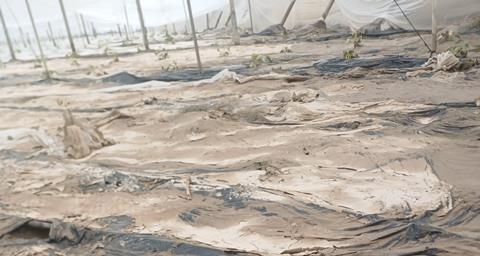
The storm, which has kept the autonomous community on high alert for the past few days, has ravaged crops and structures, affecting both older greenhouses and more modern farms.
“Although rainfall has been substantial, the most destructive factor has been the wind,” Coag said. “The strong gusts associated with Leonardo have caused damage to plastic sheeting and structures, especially in farms with a traditional design – lower and flatter layouts.
“However, the force of the storm has not discriminated based on technology, as significant partial damage is also being recorded in roofs, plastic sheeting, and ventilation systems of modern facilities, including the latest multi-tunnel models.”
In addition to this structural damage, Coag warned that another significant problem is the humidity. The persistent rains and lack of sunshine are preventing crops from drying, creating an ideal environment for fungal diseases and rot. The association said the lack of effective phytosanitary tools available to growers to combat this extreme humidity is causing a drastic drop in production, which could exceed 50 per cent when compared to the volume handled during the same period last year.
“In this regard, and although crop damage is widespread, Coag Almería warns of the particular vulnerability of crops such as watermelon. Because the plants were recently sown and are still very small, they are being severely damaged by the humidity caused by the flooding resulting from successive and continuous storms,” Coag stated.
According to Coag, the repeated flooding of the same production areas has underscored the region’s inadequate drainage infrastructure and lack of planning, leaving producers incapable of dealing with increasingly frequent and severe weather events, a consequence of climate change.
“In this regard, the current price situation reflects a natural and logical equilibrium in the face of this production decline,” Coag said, adding that “we wish to appeal to marketing companies, large distribution chains, and supermarkets to maintain price stability and avoid commercial pressure, given that supply will not be able to recover in the short term due to the severity of the damage”.
Coag said efforts to assess the damage to farms and crops are being hampered by the ongoing storms. “Nevertheless, it is expected that the reduction in the supply of fruit and vegetables in the coming weeks will have a direct impact on the markets,” it stated.
Separately, the Almería Water Board has issued a brief assessment of the provincial situation following the recent rainfall. Spokesperson José Antonio Fernández said the recovery in reservoir levels following the rains “will temporarily alleviate the province’s drought problems”. However, irrigators warn that “we are already on the first day of working towards the future and need to start planning for the next drought, which, unfortunately, will come”.