Investment is pouring into avocado production in Lebanon, with the Avocado Lebanon Association working to ensure growers meet all the requirements for European market access

Avocado production is on the up in Lebanon, according to Georgette Lahoud, area manager for the south at the Rene Moawad Foundation which, along with the Embassy of the Netherlands, supports the country’s promotional body, the Avocado Lebanon Association.
“Avocados are becoming one of the main crops in Lebanon,” Lahoud revealed. “We now have around 1,200ha, with production at around 18,000 tonnes. The sector is growing, and there is a lot of investment. In three to five years, production is expected to reach 20,000-30,000 tonnes.”
The main volumes come from the coastal area, mainly in southern Lebanon, where avocados can be grown up to 400 metres above sea level. However, growth is also being seen in the north of the country.
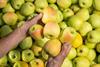
“Our main variety is the green-skin Fuerte,” said Lahoud. “We also have Pinkerton and Lamb Hass, which is related to Hass. We only have small volumes of Hass, but there is big investment in Lamb Hass, so production is on the rise.”
Exports currently go to markets including Egypt, Turkey and Jordan, as well as to Europe. “For Europe, Lebanese companies need the necessary certifications,” said Imad Riachy, project manager at the Rene Moawad Foundation. “That’s why we are working to support these farmers, to ensure they have certifications like GlobalGAP in order to be able to export.”
Keeping pace with the changing requirements of export markets can be a time-consuming job, according to Riachy. “As soon as we finish one certification, importers and retailers are asking for another one, so there can be lots of paperwork for farmers,” he said. “That is our mandate, to help growers meet and keep up with the requirements of different export markets and to work collectively.”
Of course, incursions and attacks from neighbouring Israel have made life hard for growers in recent years, especially in the south of the country. “We don’t have a lot of stability right now,” admitted Riachy, “but farmers in Lebanon continue to work and to produce, even under considerable pressures.”