Augura’s Emerson Aguirre talks diversification, resilience and the road ahead for Colombian Bananas
Emerson, Colombian banana exports grew 22 per cent in the first half of 2025. What are your expectations for the end of the year?
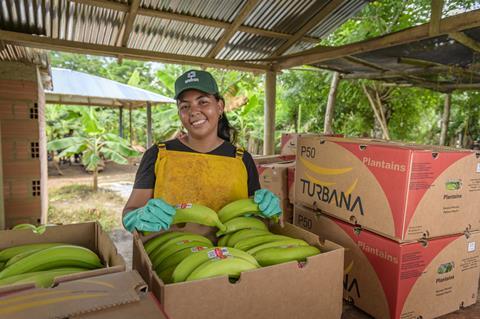
Emerson Aguirre: The growth we recorded in the first half of the year was atypical and is mainly due to exceptional weather conditions that favoured productivity in the country’s banana-growing regions. However, we estimate that this trend will normalise towards the end of the year and in 2026, when we return to historical productivity levels.
Our overall assessment remains positive: Colombia maintains its reputation as a reliable supplier, with high-quality fruit and a value chain committed to sustainability and social well-being in the producing regions.
Have there been any significant changes in the balance of shipments to Europe, the US, and other countries?
EA: Europe remains our primary destination, accounting for approximately 70 per cent of export volume, the main markets including Belgium, Germany, and the UK. However, in recent years we have made progress in strategic diversification, consolidating shipments to the US and exploring new opportunities in the Middle East and Asia.
This diversification is not intended to replace traditional markets, but rather to strengthen the sector’s resilience to price fluctuations, trade barriers, and variations in demand.
Colombia’s shipments to the US grew by 39 per cent in the first half of the year despite the 10 per cent tariff imposed by Trump in April [and revoked in November]. How do you explain this rise?
EA: This increase is due to the same exceptional productivity boom I mentioned earlier. The greater availability of fruit allowed us to serve new markets, even with the temporary tariff conditions imposed by the US.
It is important to clarify that, although our bananas were subject to a 10 per cent tariff for much of the year, they were still more competitive than fruit from other countries in the region, such as Ecuador, which faced a tariff of 15 per cent.
What is the outlook for the first half of 2026 in terms of export volumes and prices? What factors do you think will influence the international market?
EA: In terms of volume, we expect 2026 to be a year of stabilisation, with normal productivity conditions returning to the country. Regarding prices, we anticipate a challenging environment, influenced by global factors such as tariffs, currency volatility, climate impact (particularly the transition between El Niño and La Niña) and the evolution of diseases like Fusarium TR4.
However, we remain confident in the resilience of our supply chain, the logistical efficiency that the new port will bring, and the sector’s commitment to maintaining sustainable, competitive, and socially responsible production.