The new facility in Palora will fuel production and exports of the fruit
Ecuador has inaugurated its first facility dedicated exclusively to the development of dragon fruit production and exports.
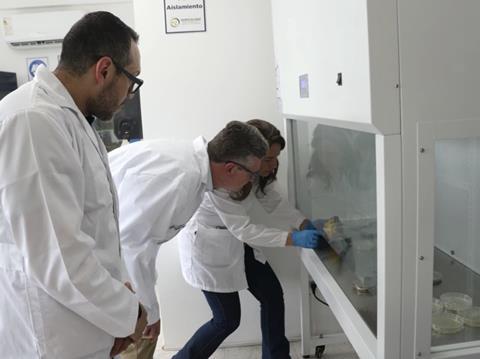
The Phytosanitary Centre for Innovation, Development, and Research of Pitahaya (CEFIDEP), is located in the canton of Palora, one of the country’s main pitahaya-producing regions and an area with significant export potential.
According to the Ministry of Agriculture, Livestock, and Fisheries, the new centre will strengthen the phytosanitary, production, and food safety management of the entire dragon fruit export chain.
CEFIDEP will provide more than 1,500 local producers with technical services such as direct assistance, specialised training, phytosanitary diagnosis, analysis laboratories and a trial farm demonstrating good agricultural practices.
The centre will incorporate innovative techniques to strengthen phytosanitary, food safety, and production processes; raise the quality standards demanded by international markets; open new commercial opportunities; improve knowledge transfer; reduce analysis times; decentralise sampling; and reinforce ongoing training in crop management and certifications.
The initiative is led by the Agriculture Ministry and plant health agency Agrocalidad, with support from the Inter-American Institute for Cooperation on Agriculture (IICA) and in partnership with the National Institute of Agricultural Research (INIAP).
Speaking during the facility’s inauguration, agriculture minister Juan Carlos Vega, said its opening marks a turning point for the dragon fruit sector. “Centres like this are an example for the rest of the production chains, which need to implement good agricultural practices, share information, and conduct research,” he said.
Ecuador has around 2,260 dragon fruit producers and 602 exporting companies. The fruit provides employment for thousands of families in 18 provinces. In 2024 alone, the country exported 50,000 tonnes of dragon fruit worth US$158mn to 61 countries worldwide, solidifying Ecuador’s position as one of the world’s leading suppliers of this fruit.