McKinsey & Company’s Global Farmer Insights 2026 survey looks at current and future trends in agriculture
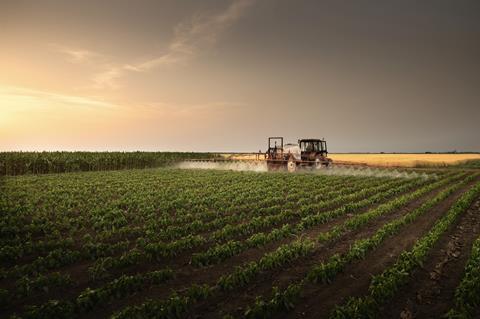
New analysis released by McKinsey & Company has revealed that farmers around the world are becoming more disciplined about spending as they navigate economic uncertainty, elevated input costs, extreme weather, and other pressures.
However, the research also found that farmers remain willing to adopt innovations that can demonstrate value.
McKinsey’s Global Farmer Insights 2026 surveyed 5,500 farmers in ten leading agriculture markets across North and South America, Europe and Asia.
”Fielded between April and July 2026, this year’s survey was conducted during a period of significant disruption for the farming industry,” McKinsey stated.
”Farm economics have been squeezed across the agricultural value chain. Fertiliser, energy, labour, equipment, and financing costs rose sharply during the last inflationary cycle – exacerbated by geopolitical uncertainty.
”Yet, while the analysis finds that spending intent is down 24 percentage points since the 2024 survey, most farmers still say they are likely to increase spending over the next 12 to 18 months,” it confirmed.
Farmers are responding to margin pressure by preserving cash, delaying some major purchases, and trading down in selected categories, McKinsey explained.
A few categories are particularly hard hit: 36 per cent of farmers identify fertiliser as the first area where they would decrease spending when profitability falls, however 50 per cent would restore it first as profits recover.
Farm equipment shows a similar dynamic, with 16 per cent of farmers citing equipment as an area to cut first, while 36 per cent expect to prioritise funding as profits recover.
Farmers are also reconsidering how much they will pay for branded products, with 35 per cent of North American and 30 per cent of European row-crop farmers expecting to shift toward generic crop-protection products.
Despite the spending pressure, farmers continue to adopt new products and technologies selectively, McKinsey found.
Biologics have become a staple of the farmer’s input portfolio, with 41 per cent of farmers reporting adopting biocontrols, and 48 per cent reporting adopting biostimulants.
Gen AI has quickly gained traction with 17 per cent of farmers globally already using it for farm-related tasks including planning and crop management.
”This pace of adoption is notable in an industry where new technologies have historically faced a high bar for uptake due to upfront equipment or hardware investment and challenges integrating with existing systems,” McKinsey pointed out.
Across spending, inputs, technology, and purchasing behaviour, McKinsey said its research pointed to a common shift: farmers remain willing to spend and innovate, but increasingly on their own terms.
For agriculture companies, the findings point to a need to clearly demonstrate the value of their innovation – or prepare to compete with simpler, lower-cost offerings.
“Geopolitical tensions and conflicts, most recently in the Strait of Hormuz, have shifted trade flows while contributing to higher energy and input costs,” said David Fiocco, senior partner at McKinsey.
”These forces – combined with local policy uncertainty, increasingly unpredictable weather, and labor shortages – are making farm-level decisions harder and more complex.
“Faced with this volatility, farmers are becoming more cautious, deferring spending in the near-term while planning to reinvest as profitability improves,” he commented.
Tom Brennan, partner at McKinsey, said: “Despite the turbulence that the agriculture industry faces, in nine out of ten countries we surveyed, more farmers expect to increase versus decrease spending in the next 12 to 18 months.
”The agriculture industry’s success will depend on helping farmers make better decisions – about where to invest, where to innovate, and where value truly exists.
“Feeding the world ultimately depends on millions of local decisions made on individual farms, acre by acre and season by season,” Brennan added.