Co-owner Jamie Petchell toured the country’s blueberry growing regions and saw a business that is adapting to meet current challenges
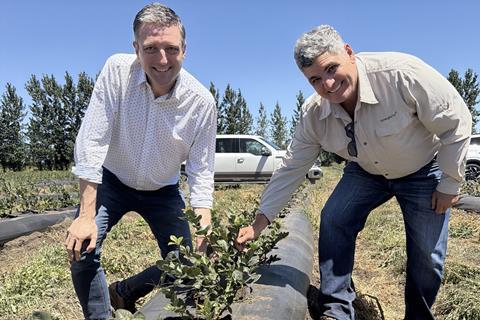
Global Plant Genetics (GPG) has said that it gained “meaningful insight” into the Chilean blueberry industry after a recent visit to the country by founder and co-owner Jamie Petchell.
Petchell toured growers, nurseries, trial sites and tissue culture laboratories during the week-long visit, concluding that the industry is ”undergoing purposeful transformation”.
”Chile’s blueberry sector is not in decline – it is in transition,” he said. ”Across all production regions, traditional varieties are being replaced with newer genetics, production systems are becoming more intensive, and long-term competitiveness is firmly in focus.”
This shift is being driven by a rapidly changing global market. Growers are no longer competing solely with neighbouring regions, but with world-class production from across Latin America, Africa, Europe and Asia, Petchell pointed out.
As a result, quality is no longer a differentiator; it is the baseline, he confirmed. What now defines success is consistency, shelf-life, flavour, fruit size and resilience throughout the supply chain.
Genetics as a strategic decision
One of the clearest messages from the week, Petchell continued, was how central varietal choice has become to commercial sustainability.
”Genetics are no longer simply an agronomic input — they are a strategic business decision,” he said.
”Replanting is already well underway, with growers carefully selecting varieties that can deliver performance under increasingly variable climatic conditions.
”Formerly high-chill zones are now being reclassified as mid- or even low-chill, while heat tolerance and seasonal stability are becoming essential traits,” Petchell explained.
On the ground
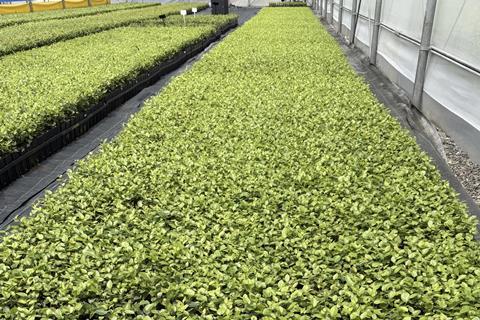
During the visit, GPG spent time with its licensed blueberry partners in Chile: SynergiaBio, Viveros Hijuelas and Viveros Sunnyridge.
Together, these partners are playing a “key role” in trialling, propagating and commercialising next-generation genetics that will define the country’s next production chapter, the group outlined.
”What stood out most was the speed of establishment and early productivity of many newer low-chill varieties,” Petchell said.
”The varietal transition is no longer theoretical – it is actively happening.”
A global breeding perspective
GPG said its blueberry portfolio is built through long-term breeding partnerships with Oregon Blueberry and The University of Georgia, two of the world’s most respected blueberry breeding programmes.
This global perspective allows the group to support growers across diverse production environments, from low-chill to high-chill zones, it commented.
In Chile, this breadth is ”particularly important”, given the fact the country’s wide geographic range requires genetics that can perform consistently across multiple climates and production systems, while still meeting the demands of international fresh markets.
Looking ahead
Over the next five to ten years, Chilean blueberry production is expected to become more consolidated, more efficient and more strategically structured, GPG confirmed.
Larger production areas, greater average field sizes and extended production windows will become increasingly common.
”Success will be defined not by volume alone, but by high-quality fruit, reliable performance, reduced input costs and strong post-harvest resilience,” said Petchell.
”For GPG and its partners, this transition represents an exciting opportunity – to help shape the future of one of the world’s most important blueberry origins through genetics designed for the realities of modern production.”