Three new services to Jeddah Islamic Port and King Abdullah Port improve connectivity in western Saudi Arabia, a key area for imported food

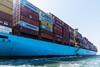
Maersk’s decision to add three maritime services to Jeddah Islamic Port and King Abdullah Port creates new options for fruit suppliers serving Saudi Arabia and the Red Sea region.
As reported in PortalPortuario, the Saudi Port Authority, Mawani, announced the addition of three new services operated by the shipping company, connecting Jeddah with Nhava Sheva and Mundra in India, Salalah in Oman, and King Abdullah Port, with a total capacity of up to 14,400 TEU.
The move will strengthen connectivity along the western Saudi coast, a particularly sensitive entry point for perishable goods. Saudi Arabia imports more than US$20bn worth of food and agricultural products annually and relies on imports for approximately 70 per cent of its food security needs, according to the USDA’s Exporter Guide Annual. The same report indicates that Saudi consumers are showing increasing demand for healthier, higher-quality food, and that retail channels are well-equipped to handle fresh and frozen products.
A more frequent service, improved regional connections and greater port integration will mean more stable logistics chains for temperature-sensitive cargo, especially in products such as fruit, where the condition on arrival determines its commercial value. Jeddah Islamic Port is not only one of the country’s main maritime hubs but is also expanding its logistics infrastructure. According to PortalPortuario, the port has 62 multipurpose berths, two container terminals, and a handling capacity of up to 130mn tonnes.
Saudi Arabia’s logistics base for perishables is also growing. In 2023, Maersk and Mawani launched the country’s largest integrated logistics park in Jeddah, a 225,000m2 facility that includes infrastructure for storage, distribution, and the cold chain, including cold storage. For fruit exporters, this investment is a concrete sign that the Saudi network is seeking to strengthen its handling of high-value and highly sensitive goods, including fresh produce.
This development also comes in a market where the expansion of retail, foodservice, and tourism continues to drive demand for imported food. With a population of 33mn, Saudi Arabia’s spending in food retail and foodservice continues to grow, with consumers showing a growing preference for healthy, natural, and higher-quality products. This makes Saudi Arabia an attractive market for fresh fruit producers seeking to diversify their destinations beyond traditional markets.