New organisation will focus on opening new markets for the state’s avocados
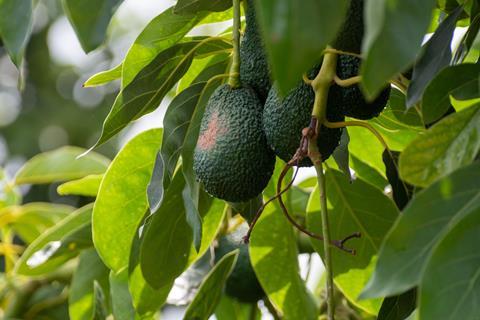
Avocado producers in the Mexican state of Michoacán have created a new association to address common challenges and opportunities the sector faces. Pro Aguacate Michoacán claims to represent around 90 per cent of the state’s producers.
At a press conference held on Monday to launch the new body, its president, Bruno Torres, said it had been created in response to the sector’s structural challenges and as a platform to improve production and marketing conditions. He explained that Pro Aguacate Michoacán will be tasked with, amongst other things, managing subsidies, consolidating the purchase of supplies, opening national and international markets, defending the sector’s interests, promoting better agricultural practices, and strengthening marketing.
Vice president Úrsula Montaño said the union had been built “from the ground up, from reality”, and that it aimed to strengthen the production chain, improve the sector’s representation, and generate fairer trading conditions.
One of the first things Pro Aguacate Michoacán will implement is a new labour certification scheme, beginning in April, to ensure that agricultural exports comply with labour laws and social security standards. The programme will require workers to be registered with the Mexican Social Security Institute and Infonavit (National Workers’ Housing Fund Institute), based on the hectares cultivated and the volume exported, in response to demands from the US market. The goal is to regulate employment in the sector and comply with international standards that are already a condition of market access.
Pro Aguacate Michoacán said work is also underway on a federal environmental certification to replacing what it called existing onerous requirements on producers to guarantee the protection of a certain area of forest for each hectare of avocado production. This involves a payment of 1,700 pesos per hectare, in addition to requirements such as georeferencing of properties and environmental compensation, which the association said increases costs for producers and creates disadvantages compared to other states.
According to Montaño, Mexico produces almost 3mn tonnes of avocados each year, of which around 1.2mn tonnes are exported to the US and some 78,000 tonnes is destined for other markets such as Europe, Japan, Canada, China, and Central and South America. The rest remains in the domestic market, where per capita consumption currently stands at 9.5kg, compared to 4.4kg in the US.
Pro Aguacate Michoacán’s treasurer, Juan Cornejo, acknowledged that the sector has fallen into a “comfort zone” due to its reliance on the US market, which absorbs 85 per cent of the avocados produced in Michoacán. However, he noted that exports to Europe are now underway, while the Brazilian market has also recently opened up for Mexican avocados.
Amongst the main challenges that the new association will tackle are the excessive use of intermediaries in the marketing process, the opening new markets, training, labour regulations, and environmental pressures.
Montaño noted that the creation of Pro Aguacate Michoacán responds to the need to build a state-level representation capable of comprehensively addressing the production, regulatory, and market challenges of an agribusiness that is key to the country. Regarding the relationship with the Association of Avocado Producers and Packers Exporters of Mexico (Apeam), she emphasized that Apeam would continue to be the organisation responsible for coordinating and overseeing avocado exports, particularly to the US.
“We are all Apeam,” she said, adding that Pro Aguacate Michoacán was seeking to complement its function by directly representing producers, with a broader focus on internal issues within the sector.