South African fruit exporters are navigating a complex landscape of US trade tariffs, Cape Town port disruptions and disappointing BRICS trade
As the global fresh produce trade gathers in Berlin and most South African discussions focus on dealing with a current export crop of exceptional quality, there remain other issues that linger in the mind.
South African sources have said that while the country is experiencing an exceptional summer fruit export season, the events of 2026 and their impact on the current year still present huge challenges.
The logistics problems in the port of Cape Town have been well established, and those growers and exporters who have favoured it in the past now realise that they will have to use multitude of ports to get their fruit to market.
The effect of US trade tariffs, specifically on the South African industry, is expected to only truly manifest itself in this season.
Stonefruit and grape shippers to the US must contend with 30 per cent tariffs, while citrus exporters will only know this year what the real impact will be.
Unsurprisingly, South Africans have cast their eyes to other markets.
The stonefruit and grape sectors have committed to maintaining and expanding their presence in Europe and the UK.
Even exports to Russia, where the war with Ukraine still casts a shadow over trade, have grown consistently over the past few years.
The new South African citrus season will only get underway from March and exporters are also keenly looking at new opportunities.
“Looking at the headlines these past few weeks, one noticed how countries everywhere – even the developed ones – are moving to secure new trade deals,” said Boitshoko Ntshabele, CEO of the Citrus Growers’ Association of South Africa (CGA).
”India signing a trade pact with the EU, Canada with China, the UK Prime Minister flying this week to Beijing in search of opportunities.
“The message is clear: everyone is seeking to diversify, because the global economy is in a state of turbulence,” he said.
”No-one can afford to stand still and not shore up protection for their economy.
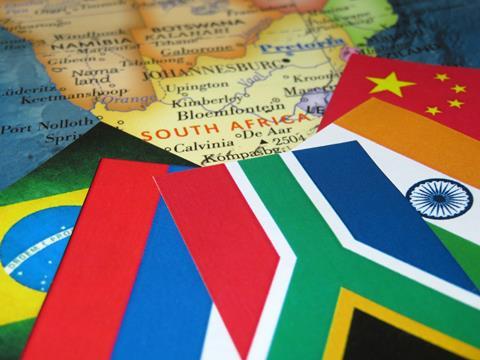
”It is interesting to note that some of these deals are concluded with BRICS countries — which are South Africa’s partners,” Ntshabele noted.
While others are deepening ties, South Africa’s trade within BRICS has not fared that well, he continued.
“In fact, it is going backwards. We joined in 2010 with a trade deficit of R66bn. In 2024, that gap, according to reports, worsened to R250bn, a figure that should concern all of us.
“I remember hearing last year about a possible partial trade pact with India,” Ntshabele pointed out. ”It sounded promising and was decidedly partial to protect our weaker sectors like textiles, while still opening doors in other areas. But it appears progress has stalled.
”And meanwhile, our partners are moving ahead, broadening their market access whilst there is no significant progress on our side.”
Last season, the CGA’s foray into promoting its citrus in India showed some promising results and, with more effort, a lot can be achieved, he said.
“Some pragmatism is needed within BRICS as the bloc cannot just be about solidarity and cooperation; trade surely must also be at the heart of it,” Ntshabele added.