The country’s total citrus export forecast is up 5mn on last year’s final figure of 203.9mn cartons
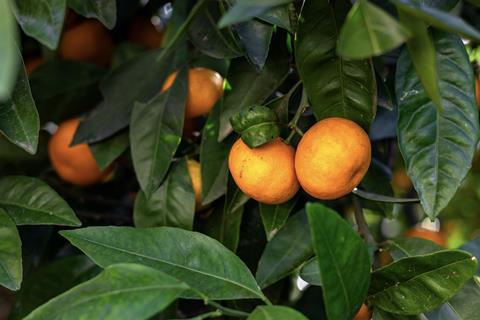
South Africa’s citrus export crop for 2026 has been pegged at 209mn cartons, following the release of the country’s mandarin forecast.
This will be 5mn cartons higher than last year’s crop, which concluded at 203.9mn cartons.
The mandarin estimate shows a slight decrease on last year’s export figure, representing stabilisation after consecutive years of strong growth.
Late mandarins are not included in the industry’s first-round estimates because of their later harvesting window, and are released about a month after the initial projections for other citrus categories.
All figures relate specifically to citrus expected to be available for export.
Chairman of the CGA Mandarin Focus Group, Hendrik Warnich, said the figures reflect a relatively steady position.
“There are no massive changes really, and it should be noted that this is, of course, an estimate, and there are a lot of variables at play,” he explained.
“One significant variable is the situation in the Middle East, where both demand and transit times are expected to be affected.
”We are monitoring the situation and the CGA will provide regular updates to growers,” Warnich commented.
Within the late mandarin category, the Leanri variety continues to show modest growth, increasing to an estimated 2.6mn cartons, up from 2.3mn cartons last year – representing a 13 per cent increase.
Orri volumes are slightly lower, at an estimated 2.4mn cartons, down 11 per cent from last year’s 2.7mn cartons.
The ’other late mandarins’ category shows growth of 11 per cent, rising from 3.6mn cartons last season to an estimated 4mn cartons this year.
This increase is predominantly the result of increases in the Royal Honey Murcott variety.
Nadorcott/Tango, the largest late mandarin category, shows a small decline of 1.6 per cent, from 31mn cartons last year to 30.5mn cartons.
“This decrease is largely attributable to marginally lower expected crop figures in the Eastern and Western Cape compared to last year’s exceptionally strong performance in those regions,” Warnich noted.
”The Western Cape accounts for about 36 per cent of the Nadorcott/Tango category, while the Eastern Cape contributes around 23 per cent, meaning that together they represent nearly 60 per cent of total volumes, and any regional variation in these two provinces has a notable impact on overall projections.”