Hortgro has highlighted the cherry sector’s expansion, driven by innovation in low-chill cultivars, strategic investment, and developing market opportunities

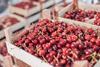
Fresh cherries in wooden crates Adobe Stock

Image: Adobe Stock

Over the past decade, South Africa’s cherry industry has evolved from a niche venture into one of the most exciting growth stories in local horticulture. 

That is the view of South African industry body Hortgro, which has highlighted the sector’s rapid expansion through innovation, developing market opportunities, and strategic investment. 

“An overview of recent industry insights not only shows how far the sector has come but also indicates where it is headed next,” it said, pointing out that cherry plantings have surged from just 185ha in 2012 to 819ha in 2024.

“This rapid expansion reflects the broader mindset of South African deciduous fruit producers, who continually seek to optimise production and diversify their market offerings.

”Cherries offer an attractive proposition: high potential returns, but also with higher risk,” Hortgro noted

One of the most significant growth factors has been the development of low-chill cherry cultivars.

The industry body said traditional cherry varieties require more than 800 hours below 7°C during winter, limiting production to colder regions.

“By contrast, new low-chill cultivars require as few as 350 cold units, unlocking production potential in previously unsuitable warmer areas,” it commented.

”This innovation has fundamentally reshaped the industry’s geographic footprint.”

The Western Cape is now the centre of the South African cherry industry, accounting for 61 per cent of all plantings.

Beyond the Western Cape, other regions are emerging as notable contributors. Gauteng and the Northwest together account for 28 per cent of total plantings, highlighting the industry’s growing national reach.

Hortgro said that by contrast, cherry production in the Free State, once the centre of South African cherry production, has been declining.

Changing and increasingly unfavourable climatic conditions have made sustained production more challenging, emphasising the sector’s environmental sensitivity.

Despite increased production overall, the domestic market remains the primary destination for the country’s cherries.

Over the past decade, local consumption has accounted for around 60 per cent of total production.

Cherries’ highly perishable nature, combined with South Africa’s relatively small share of the global export market, has reinforced the importance of local sales.

However, Hortgro said that exports have gained momentum, growing to 37 per cent of total production over the past five years.

South Africa’s export window runs from week 40 to 52, peaking between weeks 46 and 48.

To maximise freshness and market value, approximately 70 per cent of exports are shipped by air, particularly to established markets in the UK, the EU, and the Middle East.

Looking ahead, access to new markets – most notably China – could be a game-changer.

“As production continues to rise, international markets will become increasingly vital, as the domestic market alone cannot absorb future volumes,” Hortgro added.