New varieties could extend their marketing window and make the crop more profitable
Persimmon growers in Valencia are looking for ways to extend the season in a bid to make the crop more profitable.
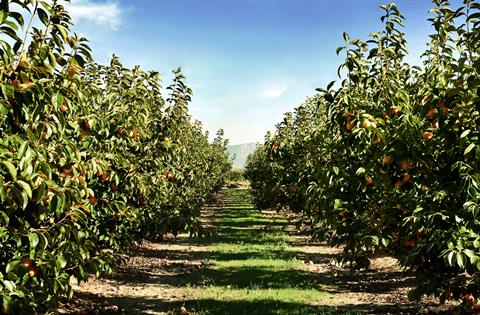
As reported by Levante-EMV, cooperative Alginet has signed a collaboration agreement with a Japanese research institute to import late-ripening persimmon varieties that would be harvested after the end of the Rojo Brillante season, the variety marketed under the Kaki Ribera del Xúquer PDO.
The aim is to extend production from its current window of October to January until around June.
Persimmon production in Valencia has stagnated in recent years. Pest, rising costs and climatic issues have eroded the profitability of what was once viewed by many farmers as a more viable alternative to citrus.
For the first time this season, the PDO’s regulatory board added the Oreto variety to its classification. Harvested in September, this would bring forward the start of the season and be complementary to Rojo Brillante.
According to the regulatory board’s president, Cirilio Arnandis, “the goal we have set is to achieve a season that runs from September to March”. He said that while the board considered this a realistic milestone, “it won’t be achievable in the short term”.
Production issues are also hampered efforts to open up new export markets for the fruit beyond Europe, such as China, the Middle East, Canada and Brazil. In seasons where volumes are low, priority is given to more established markets like Spain, Germany, France, Italy and the UK.
Figures from the Association of Spanish Persimmon Producers show that acreage has shrunk from a peak of 18,500ha five years ago to 14,000ha in 2025. “We’re talking about a decrease of 20-30 per cent, which naturally reduces the country’s productive potential, so the days of 500,000 tonne harvests have long gone,” said the association’s president, Pascual Prats.
As the 2025/26 Rojo Brillante campaign draws to a close, Anecoop, which markets around half of Spain’s total production volume, said sales would reach around 120,000 tonnes, below initial forecasts of 165,000 tonnes. This was mainly due to a higher percentage of small and medium-sized fruit resulting from the heat waves in August.
Product manager Ángel Cebriá described the season as “generally positive”, with prices that were “acceptable, although below expectations given the available supply”.