Around 60 of its major trading partners face a levy of 10-12.5 per cent, effective from last Friday
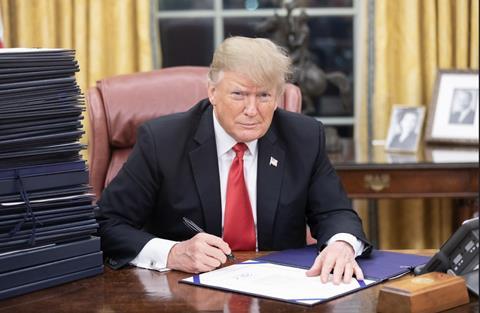
The US has imposed new tariffs on imports from 60 countries over claims they failed to prevent forced labour.
The duties, which range from 10 per cent to 12.5 per cent, target trading partners that make up the bulk of US imports, including the European Union, UK, Canada, China, and 15 Latin American countries.
They came into effect on Friday, effectively replacing the 10 per cent global duty imposed by President Trump in February that were subsequently ruled illegal by the Supreme Court. Forced to change strategy, Trump announced he would press ahead with a new round of tariffs, this time based on prior investigations by the Office of the US Trade Representative (USTR).
The USTR said the new measures had been introduced after an investigation found the impacted economies had failed to “impose and effectively enforce a prohibition on the importation of goods produced with forced labour”.
The move has sparked anger and bewilderment from the affected countries. The EU’s foreign policy chief, Kaja Kallas, said it did not reflect reality.
“If you compare our labour laws to the ones of the US, I mean, we have paid vacations, we have very good labour conditions for our employees, so it’s not really grounded,” she said.
Kallas said the EU would seek clarification from Washington, adding that the bloc had honoured commitments under a transatlantic trade agreement reached in 2025 and viewed the new tariffs as a shock.
Australia described the tariffs as “unjustified,” while New Zealand said the move was “extremely disappointing”, given that the US had not provided “meaningful evidence to support claims in relation to forced labour”. Brazil announced that it would trigger trade reciprocity mechanisms following the imposition of 25 per cent tariffs on some of its products.
Chile – one of 11 Latin American and Caribbean countries subject to the maximum tariff of 12.5 per cent – issued a swift response. Its government said Chile possesses “solid labour institutions, a robust regulatory framework, and a firm commitment to preventing and eradicating forced labour, backed by compliance with ratified international conventions”.
Frutas de Chile said it had participated in hearings convened by US authorities during the process, presenting technical, economic, and commercial data to argue for the exclusion of fresh Chilean fruit from this measure.
The association’s president, Iván Marambio, noted that Chile complements US supply –thanks to counter-seasonal production – rather than competing with it.
Marambio added that the association will continue working with the Ministry of Foreign Affairs and the Ministry of Agriculture to advance bilateral negotiations aimed at reviewing this measure and safeguarding the trade relationship between the two countries.