Europe is facing one of its smallest apple crops in a decade, with extreme weather and market pressures shaping 2026/27 season
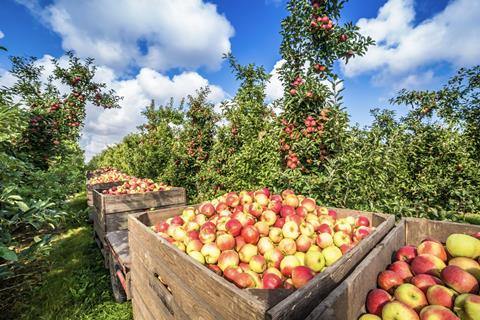
European apple production for the 2026/27 season is estimated at approximately 9.4mn tonnes, down 17 per cent compared with the previous season.
According to the World Apple and Pear Association’s (Wapa) November update, the crop is the second-smallest of the past ten years.
The forecast has dropped around 137,000 tonnes since August, reflecting lower estimates in Germany, France, Spain, Belgium and the Netherlands.
These reductions are partly offset by an upward revision in Poland, where production is forecast at 2.8mn tonnes, while Italy remains broadly stable at 2.3mn tonnes.
The season has been marked by a succession of extreme weather events, Wapa explained.
Severe frost affected the Baltic region and Eastern Europe, followed by heavy rainfall and flooding in the Iberian Peninsula.
An unusually warm start to spring advanced flowering by one to two weeks, exposing blossoms to record sub-zero temperatures in April.
Heatwaves and drought subsequently affected many production areas between May and August, impacting yields, fruit size, quality and storage potential.
The Jonagold group of apples has been particularly affected, with production declining by approximately one-third compared to the previous season, while Golden Delicious and Gala remain the two largest varieties despite reductions of around 12 per cent.
Club and newer varieties appear to have demonstrated greater resilience, Wapa pointed out.
Germany and France account for the largest downward revisions, with French production forecast approximately 29 per cent below its three-year average.
Quality challenges are also reducing fresh-market availability, with smaller fruit, hail damage, sunburn, water stress and pests affecting marketable supply and storage life.
Despite the smaller crop, prices remain under pressure, the association confirmed.
The continued clearance of old-crop stocks is creating competition for new-season fruit, while more production is being directed towards processing.
Compared with September 2025, calculated apple prices have declined in Poland, Germany, and in Italy.
International trade also reflects a more challenging market. EU apple exports reached approximately 180,000 tonnes up to 25 October 2026, down 16 per cent year-on-year.
Italy and Poland remain the leading exporters, while Egypt, Saudi Arabia and Colombia performed ”relatively well” as destinations, Wapa continued.
EU imports from Southern Hemisphere suppliers also fell, reaching approximately 117,000 tonnes, down 32 per cent compared with the same period in 2025.
Apple stocks across eight reporting countries stood at approximately 2.96mn tonnes on 1 November, 14.6 per cent below the previous year, with particularly significant reductions in Germany and France.
“Overall, Wapa’s November update highlights a season characterised by lower production, weather-related quality challenges, and continued market pressure,” it added.
”Although reduced stocks may provide some support as the season progresses, the balance between supply, quality, and demand will remain decisive for the European apple market, which Wapa will continue to monitor throughout the season.”