Unprecedented weather conditions and lower yields have prompted £200,000 investment in blackcurrant research project to increase climate resilience
British blackcurrant growers are forecasting lower yields after last year’s droughts and wet winter brought “unprecedented” weather challenges.
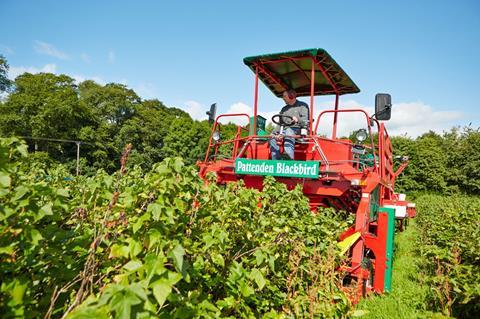
A difficult production season has caused some premature berry drop and scorching, with volumes expected to be below the average of 10,000 tonnes.
Despite reduced yields, the first fruit has shown high natural sugar levels that is delivering strong juice quality.
Production challenges have prompted a £200,000 investment from Ribena brand owner Suntory Beverage & Food GB&I, along with the Blackcurrant Foundation and research institute Niab, in a four-year research project on soil health and climate resilience.
“It has been an exceptionally challenging season for blackcurrant bushes,” said Suntory agronomist, Harriet Prosser.
“Climate resilience is now one of the biggest priorities for our industry. This research will help us understand how healthier soils can support stronger, more resilient plants, enabling growers to better cope with increasingly unpredictable weather in the future.”
The project will test different ways of improving soil organic matter, including wool, pelletised pasteurised manures and green waste products.
Researchers will assess soil health, plant establishment, bush vigour, yield and berry quality to identify the most effective approaches.
Blackcurrant grower and chair of the Blackcurrant Foundation, Jo Hilditch, said: “As growers, we’re incredibly resilient, but there’s no doubt we’re farming in a very different climate from even a decade ago.
“Working alongside Suntory and Niab, we’re investing in practical research that will help growers build healthier soils and more resilient crops. It’s about ensuring British blackcurrant production continues to thrive for generations to come.”
Suntory, which buys around 90 per cent of the British crop, recently announced a £14.5 million investment in a state-of-the-art blackcurrant processing facility, in partnership with Herefordshire-based Bevisol, with fruit set to be processed there for the first time this harvest.
The UK blackcurrant harvest is underway in Herefordshire, Gloucestershire, Kent, Scotland and East Anglia.