Ripening solutions provider helps customers meet stringent requirements with consistent supply and results
In a global market facing increasing disruption, Catalytic Generators prides itself on delivering dependable ripening outcomes for its customers in Australia and New Zealand.
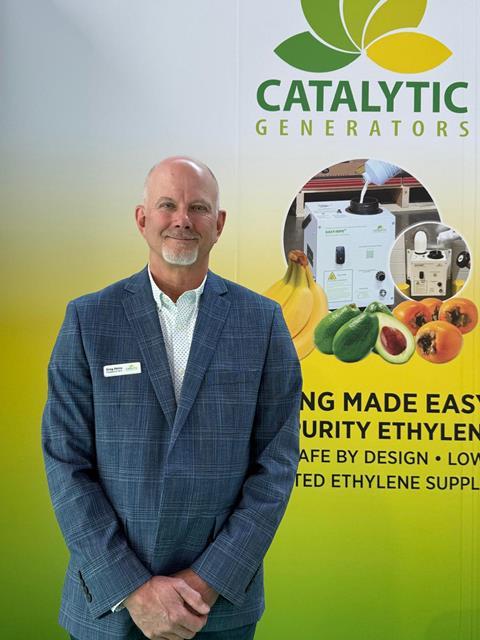
President and CEO Greg Akins notes that ethylene is primarily produced for large-scale industrial applications, leaving ripening operations dependent on a supply chain driven by much larger industries.
As a result, Catalytic Generators’ ability to produce its Ethy-Gen II from natural, sustainable, renewable sources, provides security of supply and a point of difference.
“We are already seeing growing awareness within the industry that ethylene availability should not simply be taken for granted anymore,” explains Akins.
“This dedicated focus (on ethylene) allows us to respond quickly to market needs and maintain a stable, reliable supply model, even during periods of market uncertainty.
“At the same time, our Easy-Ripe systems help operators reduce dependency on external cylinder supply chains by generating ethylene directly on-site within the ripening room, giving customers greater operational control and flexibility.”
Catalytic Generators’ Australian distributor, Leigh Cummin, says this security is particularly important in an Australasian context, where the ripening market continues to evolve towards more structured, retailer-driven programmes, and consistency, shelf-life and presentation are critical.
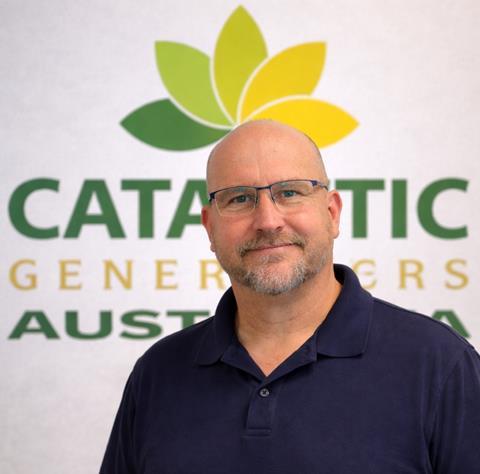
With cost pressures rising across all parts of the produce business, providing the right ripening outcomes becomes even more important. Catalytic Generators works to provide fast, local technical support to help customers simplify their operations.
“Every rejected carton hits margin, so operators are looking for more control, greater consistency and less operational risk,” says Cummin. “Whether operating one room or many, we can support the ethylene needs of virtually any fresh produce ripening facility.
“As examples, we have a client operating 40 tomato ripening rooms, all using our Easy-Ripe generators. Another customer operates 76 banana ripening rooms, all supported through our Centralised Ripening System.”
Australian Produce Partners is one customer that has relied on Catalytic Generators’ support to supply major retailers across Australia year-round while reducing waste and improving quality.
“Initially, we had concerns about implementing a new system in our existing facilities, as well as service and raw material availability. However, Catalytic Generators Australia has ensured we have not missed a beat, delivering a worry-free solution,” says Richard Clayton, managing director of Australian Produce Partners.
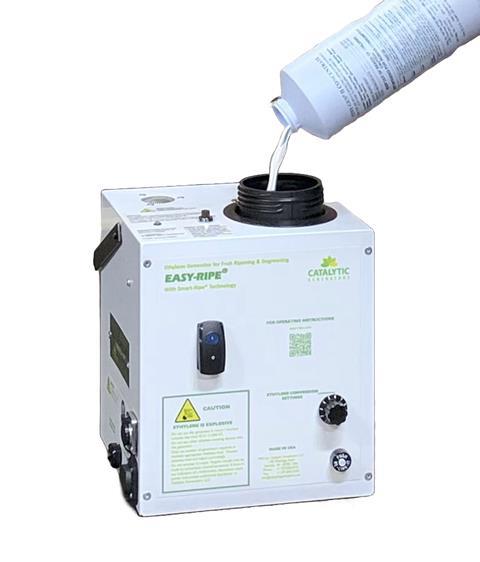
To provide an even smoother ripening experience, Catalytic Generators has been developing remote, digital monitoring and control capabilities for its ethylene application systems. The company hopes to introduce these advances to the Australian and New Zealand markets by early 2027.
“Our objective is to make the ripening process even easier by giving clients real-time access – via mobile device or computer – to information about the ethylene application process. This will allow users to verify that the equipment is producing ethylene properly, monitor system performance, and make adjustments when needed.
“As ripening operations become more automated and data-driven, customers are increasingly looking for greater visibility, control and operational confidence. Remote monitoring technologies such as SmartRipe are designed to help operators respond more quickly to changing conditions, improve consistency and simplify day-to-day management across ripening facilities.”