CEO tells Fruitnet about plan to sell company, and how its strategy on apples and IP should hold it in good stead
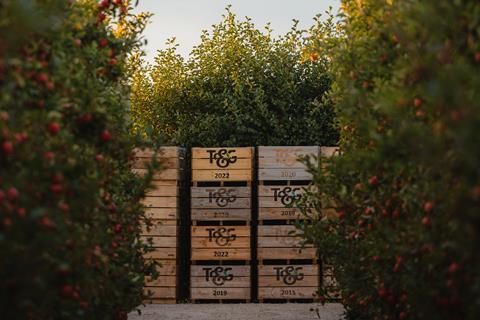
On 30 April, T&G Global announced it was in discussions to sell its New Zealand fresh produce business to the Turner family – the original founding family of T&G – and its Fijian and Pacific businesses to Bidfood.
Following the news, T&G Global CEO Gareth Edgecombe talked to Fruitnet about the decision to divest and the long-term strategy the company has set in place as it prepares for the planned exit of its largest shareholder, BayWa. Below is an excerpt of the interview; for the full article, see the 2026 Winter edition of Produce Plus and other upcoming Fruitnet publications.
T&G Global conducted a review over the past year to evaluate your long-term strategy and growth options. You have now announced plans to sell your New Zealand fresh produce, Fijian and Pacific Island export businesses. How does this fit into your strategy?
Gareth Edgecombe: In April last year, we started a comprehensive strategic review to look at the long-term potential of our businesses, to understand the capital requirements, growth projections and just how we are placed overall. We concluded that the global premium fruit category – particularly premium apples and the plant genetics space – will remain a very attractive market over the coming ten years and beyond. And that we’re well placed with the growth strategies we have put in place to go after those opportunities.
When we also looked across the portfolio, within parts of our T&G Fresh business, we saw fewer global growth opportunities and more of a domestic and regional opportunity.
Taking a disciplined approach to where we place our capital for the future and make the most for shareholders, we determined that focusing on the long-term global platform of IP-based participation in premium fruit was the best investment for long-term shareholder returns. The question then became, are there players out there that would be interested in taking on our T&G Fresh portfolio?
It’s been a strongly competitive process. We’ve seen some comments that it’s been too complex, or people have dropped out. However, we didn’t have anyone drop out from the process. All participants in the process remained involved, and from that, the T&G board was able to determine the best option.
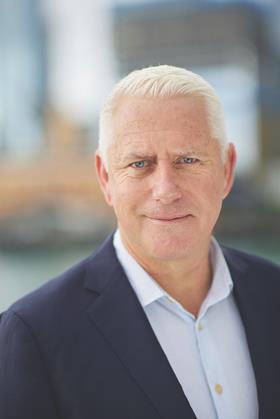
The best option has been a combination of Bidfood for the Fiji and Pacific Island exports businesses and the Turner family for our New Zealand fresh produce business – and we’re currently in advanced discussions with both parties to divest these businesses to them. Our businesses fit their portfolios and strategies, and we’re really confident that it makes sense.
We expect the proposed sale to the Turner family may require New Zealand Commerce Commission clearance, but if these sales go through, it will allow us to pay down debt and strengthen our balance sheet to create flexibility for future investments in the global growth strategy that we’ve been embarking on.
If we look at our apples business, over the last eight years we’ve seen a lot of domestic and global investment from multiple parties in our premium branded varieties, and the apple orchards that we’ve planted ourselves are only just starting to produce commercial volumes.
We expect a natural scale up of our apples business, and expect volumes will grow by roughly 50 per cent out to 2030 just on what’s been committed and planted in the ground.
That means our growth strategy, to a large degree, is already set and funded. The most important aspect is executing really well. That means continuing to build our global premium Envy, Jazz and Joli branded apples out in key markets and I know we’re well placed for that.
We don’t need new strategies to drive that growth pattern but having a flexible balance sheet will mean we have the ability to consider new products, deeper investments, investments in other territories, or even potential acquisitions that can bolt onto that global platform, both in genetics and the apple space.
You’ve identified your apples and VentureFruit divisions as the two key pillars to drive future growth. Do you see these as complementary?
GE: Yes, they’re complementary in that the Venture Fruit business is the discovery arm and the pipeline for new premium apple genetics. Part of the reason we set VentureFruit up as a separate organisation was to enter into different categories and we’ve been able to expand, particularly into global berries.
Within apples, there will also be certain opportunities where VentureFruit looks to commercialise products that won’t go through the T&G network.
The strategy of our T&G apples business is to only pick a handful of genetically superior, blockbuster varieties that have the right orcharding, economic and consumer attributes, and to scale them with significant investment to the point they become must-stock premium apple brands in multiple key regions.
That’s a hard thing to do and you need the very best product and a lot of commitment behind the strategy. But we’ll always have first option on new material coming through VentureFruit.
How do you execute the apples strategy effectively?
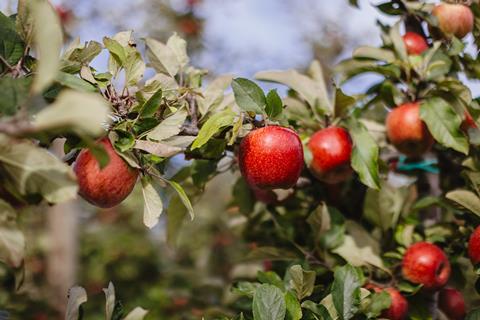
GE: We’ve built a world-class end-to-end apples management platform, connecting each part of the value chain – from superior varieties and modern orchards, right through to creating demand for our premium brands. This provides our apples strategy with strength and flexibility.
Our apples portfolio is grown in over 11 countries, across both hemispheres – with Washington State and New Zealand our two main areas. This enables us to service our key markets. That supply goes into a global sales and operations planning matrix so that customers and consumers have 365-day supply.
We’ve also got a lot of plantings that our network of growers has invested in to supply local-to-local across Europe, the UK, China, Australia and other markets.
A key part of executing is having stringent quality growing and post-harvest systems, and a really good handle on managing trade flows through a global sales and operation dashboard. This enables us to match supply and demand, allocating fruit at the right time to maximise value.
The continued global growth of the premium apple segment and the premium fruit segment, particularly in Asia, looks attractive and has been verified.
We’re well positioned to capture this growth. A critical focus is ensuring we build demand. We do this by expanding into new markets and territories, increasing ranging across channels and customers, making sure we have excellent brand presence in modern trade and retail outlets, and that we connect and engage with more consumers.
To support this, we’ve invested in building capabilities across all of our key markets, including Asia, North America, Europe and UK.