Exporters blame lack of reliable trade statistics for failure to plan adequately for latter stages of season
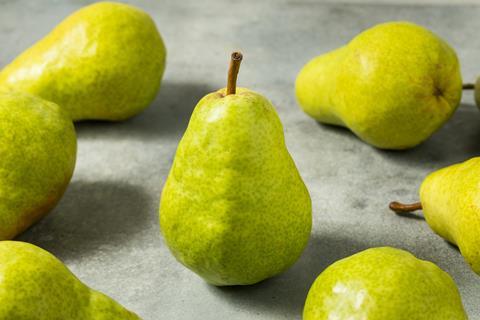
Argentine pear exports are experiencing a slowdown after one of the best starts to the season in a decade. Data from plant health agency Senasa and reported by Más Producción shows that 334,300 tonnes were exported between January and November, almost the same as the 331,200 tonnes shipped during the same period last year.
This contrasts sharply with the first half of the year, when exports were growing at a year-on-year rate of nearly 10 per cent thanks to a combination of good availability, favourable market conditions and a relatively competitive exchange rate. However, shipments began to slow down in July.
Industry sources said the decline recorded since then is mainly due to the limited availability of fresh pears in the second half of the season. “Everyone sold their Packham’s pears until August for fear of a surplus, like last year. And now there aren’t any, and prices have skyrocketed in Brazil. That happens because we never have reliable statistics,” a major exporter told the newspaper.
This created a shortage of fruit in peak condition for the final stretch of the season. In only one of the past five months – September – did shipments exceed those of the 2024 season.
Despite the dip, pears remain Argentina’s most important fruit exports, both in terms of volume and value. Brazil is consolidating its position as the main destination, absorbing around 40 per cent of shipments. Prices in this market have risen sharply in recent weeks due to the lower availability of fruit, which has served as a partial buffer for the sector.
Russia and the US rank second, each taking around 16 per cent of the total export volume. Then come Mexico, Italy, and Peru. This market concentration represents both a strategic advantage and a risk to shippers – any fluctuation in demand in Brazil immediately impacts export figures.
While pear exports are losing momentum, the Argentine apple business is experiencing a much more dynamic season. Between January and November, exports reached 87,100 tonnes, representing a year-on-year increase of nearly 20 per cent. This is one of the best figures in the last five years, and according to industry analysts, exports are currently at their highest levels since 2020.
According to Más Producción, the contrast between the performance of pears and apples leaves the Argentine fruit sector facing a dual scenario: on the one hand, pears face difficulties related to business planning, fruit availability, and dependence on Brazil; On the other hand, apples are positioned as a product with clear growth, showing steady recovery and positive signs for the short term.
According to analysts, the year’s final performance confirms the need to improve the sector’s information and statistical systems to avoid hasty business decisions that could disrupt supply at crucial times. Looking ahead to 2026, the challenge will be to recover export volumes of pears and sustain the growth achieved in apples, within an international context that remains competitive and volatile.