AgroBelgrade 2026 took place in the Serbian capital in January, bringing together over 500 exhibitors from more than 15 countries, and facilitating connections between regional suppliers and European buyers
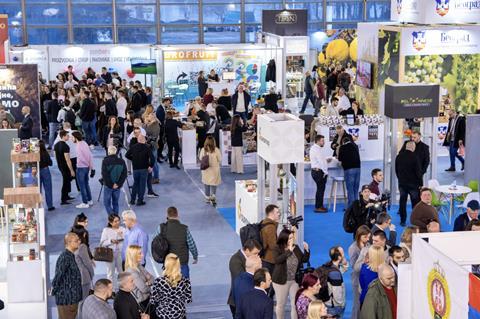
The 7th International Fruit Growing, Viticulture and Vegetable Growing Fair, AgroBelgrade 2026, opened with agriculture minister Dragan Glamočić announcing that Serbia is entering 2026 with a clearly defined strategic direction for crop production development, positioning fruit growing, vegetable production, viticulture and floriculture as drivers of exports, added value and food security.
The minister highlighted that during 2025, Serbia exported more than 276,000 tonnes of fruit worth €728.5m, making fruit, alongside wine, one of the country’s strongest export assets. The government will increase support per hectare for intensive production this year, as well as investments in perennial plantings, protected cultivation, processing and cold chain infrastructure. Maximum investment value for establishing perennial plantings will rise from three million to five million dinars per hectare.
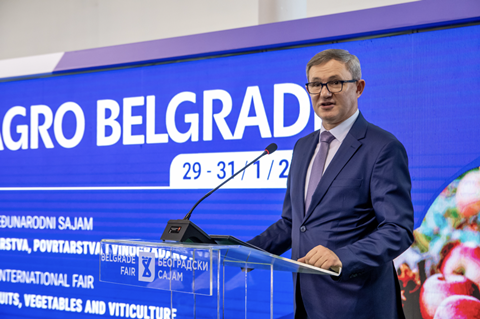
“The event has recorded growth in the number of visitors and business meetings year on year, becoming one of the key meeting places for producers, exporters and retail chains from Europe,” said Vladimir Živanović, AgroBelgrade director. “This year’s edition features an engaging conference and educational programme, as well as numerous B2B meetings directly connecting supply and demand.”
Dutch embassy officials in Belgrade were proactive at the event. Opening a reception on the first day, chargé d’affaires Mark van der Linden stressed that lasting competitiveness in agriculture depends on partnerships that transform innovations into practical, measurable improvements across the entire chain – from production to trade. Agricultural attaché Michiel van Erkel joined a conference discussion on regenerative and sustainable agriculture, connecting on-farm practices with technology, standards and market requirements.
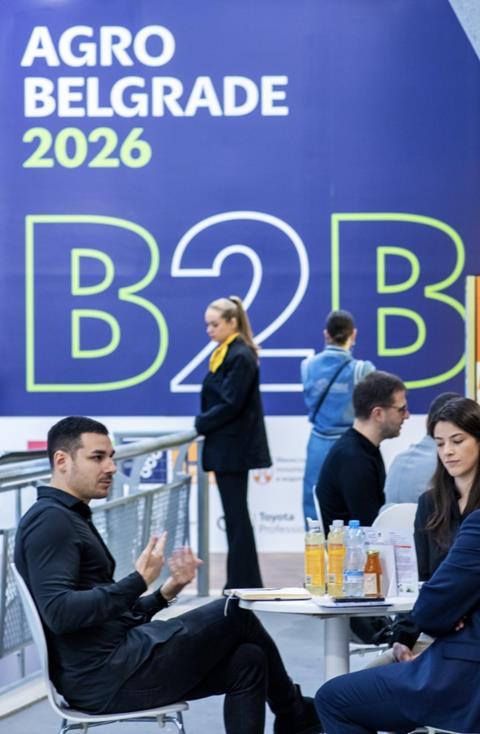
The B2B Zone attracted over 100 participants, facilitating meetings between regional and European buyers of fruit and vegetables and suppliers from across the Western Balkans. Conference sessions covered strategies for developing fruit growing, vegetable production and viticulture in Serbia, farmer training and certification for pesticide use, modern logistics and transport systems, irrigation systems in viticulture, and principles of regenerative agriculture.
Industry perspectives
Milan Manojlović, head of fruit and vegetable procurement at Agrounija – part of MK Group, one of Serbia’s largest apple production and export companies – said he was pleased with this year’s AgroBelgrade. “We had the opportunity to hold important discussions with potential buyers and suppliers within the B2B Zone – both for the Balkan market and for placement in EU and UK countries,” he said. “The impression is that demand for premium variety and quality apples is slowly stabilising. There has been a decline in overall apple production in Serbia, with only a portion oriented towards export to developed markets including the EU, UK and Middle East. However, Serbia has enough good companies producing top-quality apples, and areas with varieties in demand on foreign markets are slowly beginning to predominate, as are orchards with modern cultivation systems. Our company is a leader in offering quality Gala, Golden Delicious and Granny Smith apples, and we are also the only producers of the club variety Crimson Snow in the region.”
RZ Agro, representative of Rijk Zwaan in Serbia, participated in AgroBelgrade for the first time. “The impressions are more than good,” said Đurđe Spasojević, director of RZ Agro. “In one place you get the opportunity to talk with all actors in the production chain, inputs, finance and sales. We had the chance to meet with a large number of farmers, our vegetable growers, with whom we are arranging and planning production for 2026. On the other hand, we spoke with some of the most significant European wholesalers and retailers. We are able to organise delivery of significant quantities of vegetables, watermelons and melons in a fully controlled production system, based on contract-cooperative principles with reliable farmers in Serbia and Albania. Of course, Rijk Zwaan’s excellent selection of hybrids helps a lot, as does the know-how of their experts with whom we work closely. Our team of experienced agronomists and technologists follows every step of production with our farmers, whilst adhering to the highest food safety and labour standards.”
Among B2B Zone buyers were regional food retail chains recording significant expansion in Serbia, including NS Bomi and ALBI market. Executive director Vrasidas Grafakos explained: “We are very satisfied with the number and content of business meetings with suppliers from Serbia and all countries of the Balkan region. Our retail chain was interested in all three segments of the fruit and vegetable industry – fresh, frozen and processed. It’s good that regional suppliers pay equal attention to exports and domestic markets. Only in this way can they successfully diversify their sales. The Balkans has an exceptional offer not only of fresh fruit, but also unique processed products, such as premium spreads made from roasted peppers and aubergines, as well as jams and spreads with high fruit content.”
Companies in the irrigation and modern orchard design sector had a strong presence at AgroBelgrade. “Serbia, as well as most countries in the region, has a small percentage of irrigated areas, and in light of increasingly unstable climate and prolonged summer droughts, successful production of fruit, vegetables, and recently grapes, can practically not be imagined without modern irrigation systems,” said Olivera Lukacevic, development director at Inovit Team and partner of Netafim. “Our company has been present at this fair for years. It’s great for us that this is a specialised exhibition that includes crops where irrigation is essential. We have good experience, and demand for modern irrigation systems is solid.”
Consultancy agency Smart IPARD from Novi Sad was among exhibitors supporting investment planning. “We provide services to companies and farmers by preparing and monitoring projects related to investments in agriculture and rural development,” a spokesperson explained. “The EU funds that Serbia and Western Balkan countries receive are very significant in supporting these investments, but national funds and other financing sources are also important. Interest at the fair for new investments was significant. Farmers are mainly interested in equipping themselves with new machinery and establishing new fruit plantings, with notable interest in rural tourism projects.”
This year’s AgroBelgrade also saw a noticeably increased presence from fruit and vegetable producers from North Macedonia, Greece and Turkey.