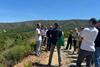
Spain’s BioDiversity Grow project is analysing biodiversity, water, soil, and climate across more than 200ha of Spanish farms until 2028

BioDiversity Grow

Image: BioDiversity Grow

Initial results from a Spanish biodiversity pilot project show that fruit and vegetable farms that employ cover crops, hedgerows, and refuge areas or adjacent natural vegetation have higher levels of biodiversity.

Launched in 2025 and scheduled to run till 2028, the BioDiversity Grow initiative analyses the biodiversity of Spanish agriculture using more than 30 scientific indicators across over 200ha of crops including citrus, stonefruit, tomatoes, peppers and melons in the Valencian Community, Andalusia, the Region of Murcia, and Aragon. A total of 18 producers are taking part in the initiative, with six new growers joining this year.

The initial findings were presented this week at the Polytechnic University of Valencia (UPV), during an international technical conference on biodiversity and the agri-food chain. The event brought together experts, researchers, technicians, producers, and representatives from the agri-food sector to discuss the new challenges of biodiversity, sustainability, and environmental traceability.

Representatives from BioDiversity Grow, Food for Biodiversity, UPV, Citrosol, AgroFresh, and other stakeholders involved in sustainability, standards, agricultural production, and the supply chain were amongst those who took part in the event.

The initial data collected in the field on more than 30 scientific indicators show significantly improved biodiversity metrics, including a greater presence of beneficial fauna and improved biodiversity indices on farms with ecological infrastructure such as hedgerows, refuge areas, or adjacent natural vegetation.

Marked differences were also observed between plots with plant cover and conventional management practices, especially in soil activity and functional biodiversity. In the plots analysed so far, the project has detected high levels of organic matter in a significant portion of the sample: 40 per cent show very high levels and 13.3 per cent high levels. Regarding enzyme activity, another indicator associated with healthy soil, 73.3 per cent of the plots are within normal ranges and 20 per cent reach high values.

María Dolores Raigón, professor of soil science and agricultural chemistry at the Polytechnic University of Valencia, highlighted the importance of soil biodiversity as “a strategic agronomic element” for agricultural production, water retention, fertility, and climate change mitigation. “Without soil biodiversity, there is no soil health,” she said.

The results show that some farms taking part in the project have already been able to reduce their use of chemical active ingredients and are showing initial signs of less pressure from certain pests.

During the conference, BioDiversity Grow was presented as a comprehensive tool applied to biodiversity, sustainability, and environmental traceability. The platform allows for the organisation and comparison of data by season, region, crop, and management type, with the aim of transforming information collected in the field into verifiable and comparable indicators for producers, technicians, certification bodies, and distribution chains.

Carlos Martínez, spokesperson for Quality & Adviser and BioDiversity Grow, explained that the platform aims to ensure that “field data reaches each link in the food chain with the appropriate interpretation, without duplication or loss of information, from the field to the supermarket shelf.” He noted that the system allows for collaboration with various profiles—producers, technicians, sustainability managers, auditors, independent verifiers, sales managers, and retailers—so that each stakeholder has access to information relevant to their role.

The platform generates reports by farm, crop, and season, as well as indicators of progress in biodiversity, water footprint, carbon footprint, soil sustainability, and pesticide reduction. It also facilitates traceable reports for responsible purchasing programs, certifications, and ESG strategies, in a context of increasing European requirements for sustainability reporting starting in 2027.

The national pilot project is being developed within the framework of the ESS, GlobalGAP’s sustainability standard, with the participation of Quality & Adviser, through BioDiversity Grow; Agraya, through ESS GlobalGAP; and Global Nature Fund, through Basis Set.

The experimental programme uses scientific criteria to measure biodiversity, water, soil, and climate in crops such as citrus, stonefruit, tomatoes, peppers, cucumbers, melons, watermelons, celery, lettuce, and broccoli.

The Valencian Community accounts for 117ha of the project, making it a key region within the pilot programme due to its significant role in the environmental assessment of strategic crops for the Mediterranean fruit and vegetable sector.