Growers in southern Italy face ‘challenging’ outlook at start of new campaign, with availability of early varieties down
Kölla Italia, part of Kölla Group, says there will be significantly less availability of early stonefruit varieties in some parts of Italy as the European season gets underway.
In an article published on its website, the supplier said growers in southern Italy in paricular were starting this year’s campaign under “somewhat challenging” conditions.
“This season clearly demonstrates how strongly regional and weather‑related factors influence the course of the campaign,” explained Fabian Negri, managing director at Kölla Italia. “Broad generalisations about the Italian stonefruit harvest are almost impossible this year.”
The group said field inspections and discussions with growers in the key production areas of Basilicata, Puglia, and Calabria had yielded a mixed picture, with early varieties facing “noticeable volume shortfalls” in some regions, but later varieties generally showing “more stable development”.
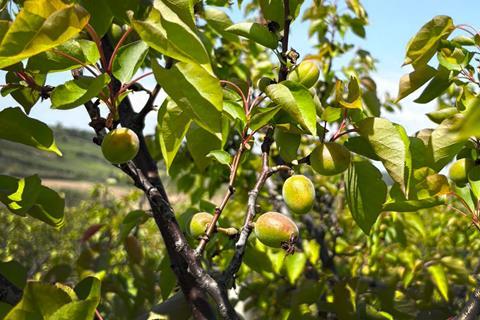
Weather conditions during flowering, localised fruit drop, and hail event in the second half of April were all affecting yield expectations differently depending on region and crop, it added.
In Basilicata, particularly in the areas around Metaponto and Scanzano, volumes are expected to be lower as a result of cool temperatures during the flowering period, which led to reduced fruit set in early varieties.
“At the same time, the quality of the available fruit is assessed positively overall,” the company added.
Sizing showed good uniformity, however, and despite reduced volumes, the fruit remains broadly marketable with mid‑early varieties experiencing more moderate declines, it noted.
In northern Puglia, a localised hailstorm is understood to have affected several early and mid-season stonefruit crops, but later varieties have apparently shown greater resilience.
Conditions in Calabria appear “considerably more balanced”, the group said.
“Accurately assessing the remaining volumes and maintaining close cooperation with growers will be essential to consistently safeguard quality and supply reliability,” Negri emphasised.
From July onwards, the focus shifts to northern Italian origins, including Emilia‑Romagna, Verona, and Piedmont.