
A new campaign designed to expose over-priced cosmetics offers plenty of hope for the fruit and veg business

Source: The Ordinary
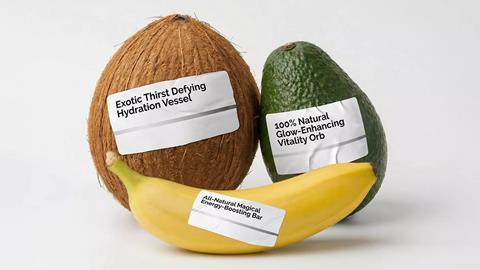
The curved, yellow fruit on sale at Markup Marché is not a banana. It’s an ‘all-natural, magical, energy-boosting bar’. To buy it, you must pay £74.
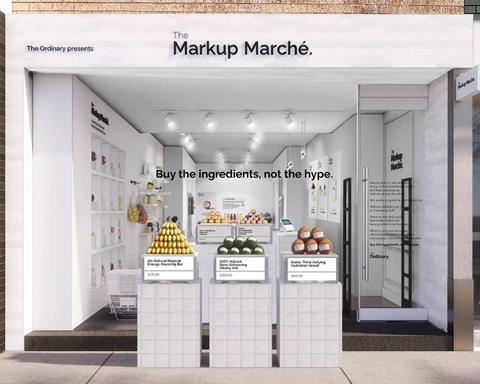
In fact, at pop-up stores opening this month in London, Melbourne, Mexico City, Paris, São Paulo, and Toronto, you can purchase a whole range of creatively named produce items at prices so high they will make your eyes water.
You can pay through the nose for a ‘doctor-recommended, daily vitamin activator’ (apple, £202); a ‘glow-amplifying Vitamin C capsule’ (orange, £195); ‘antioxidant-rich, youth-preserving love gems’ (punnet of cherries, £132 per 100g); an ‘exotic, thirst-defying hydration vessel’ (a coconut, £147) ; a ‘fibre-dense, digestive leaf ball’ (cabbage, £136); and a ‘100 per cent natural, glow-enhancing vitality orb’ (avocado, £229).
The reason for these monumental mark-ups? Somewhat unexpectedly, fresh produce finds itself at the centre of a global beauty industry debate after skincare brand The Ordinary decided to open six grocery stores and expose what it describes as absurdly overblown pricing in the luxury beauty market.
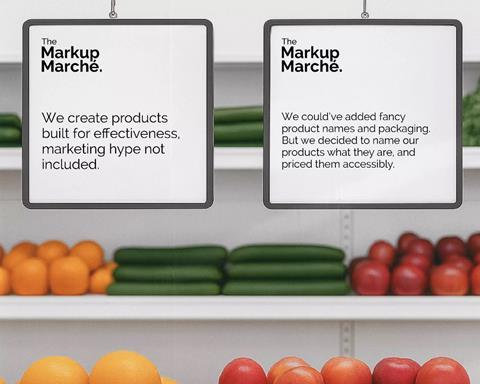
The campaign is designed to satirise the beauty sector’s use of premium packaging, scientific-sounding language, and wellness claims to justify steep margins.
According to The Ordinary’s parent company Deciem, some luxury beauty products can carry markups as large as 700 per cent.
And while the campaign’s primary target is the cosmetics business, it also inadvertently highlights a long-standing contradiction in the fresh produce trade, namely the fact that fruits and vegetables deliver genuine nutritional and wellbeing benefits without the inflated storytelling or pricing structures seen elsewhere in what is labelled the ‘wellness economy’.
Ridiculous to sublime
For decades, fresh produce marketers have largely sold fruit and vegetables on value, freshness, and basic nutrition, even as sectors such as beauty, supplements, and functional wellness demand astronomic premiums for essentially the same, naturally occurring compounds.
Avocados, for example, are rich in healthy fats and antioxidants associated with skin health, while bananas contain potassium and vitamin B6 linked to energy metabolism.
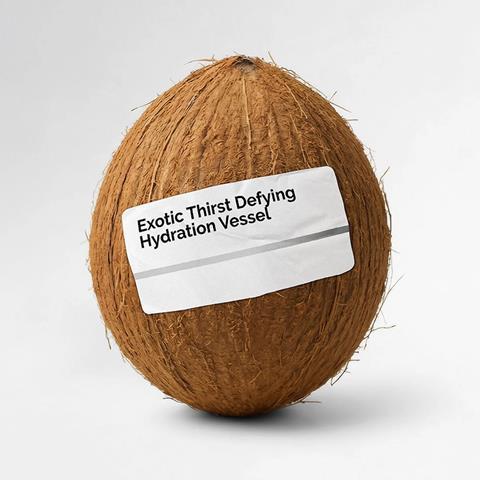
Coconuts too have become shorthand for hydration and wellness positioning across multiple consumer categories.
Yet all the while, in supermarket fresh produce departments, these products remain low-priced, everyday commodities, rather than costly, aspirational lifestyle purchases.
The Ordinary’s campaign effectively asks consumers to imagine what would happen if fresh produce adopted the same approach to merchandising that cosmetics does.
The result is intentionally ridiculous, but also exposes how undervalued many natural food products remain.
TrendWatching, which covered the activation this week, notes that consumers are increasingly questioning whether branding and “premiumisation” justify higher prices across industries.
That’s a trend which could create opportunities for fresh produce suppliers and marketers, who might reposition fruit and vegetables more strongly around their inherent functional and nutritional qualities.

Time to stake some claims
Of course, many in the produce industry have already noted and acted upon rising consumer interest in things like antioxidants, gut health, hydration, and nutrient density.
But compared with beauty and wellness brands, produce companies have generally been reluctant to attach high-value lifestyle narratives to natural ingredients.
Or in many instances, they simply aren’t allowed to make certain health claims. Zespri’s breakthrough certification of green kiwifruit’s digestive benefits stands alone as a claim that can be marketed in the EU.
All the same, the sector’s historical focus on logistical efficiency, affordability, food safety, and accessibility now feels like a throwback to an era where the growth of supermarket distribution dominated suppliers’ commercial strategy.
What that means now is that fresh produce often misses out on the premium margins generated elsewhere from wellness marketing – despite that fact that fruit and veg are the most natural and indeed plant-based of natural, plant-based foods.
The irony of The Ordinary’s campaign is that it’s one the fresh produce business really ought to consider as a sincere promotional tactic.
Ok, so nobody in their right mind would pay £74 for an ‘all-natural, magical, energy-boosting bar’. But, with that kind of marketing, they might be pursuaded to pay more than 74p.