Industry association issues statement in defence of its exporters, after Venezuela’s interim president pointed finger at Ecuadorean presidency
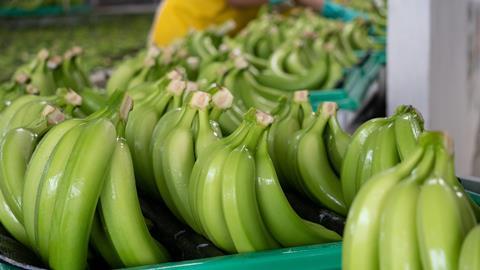
Banana industry leaders in Ecuador have refuted comments made by Venezuela’s interim vice-president Delcy Rodríguez, in which she alleged that the Ecuadorean administration was complicit in smuggling cocaine out of the country via banana export facilities.
“In truth, if [the US] wants to combat drug trafficking, they should go to Ecuador, from where 70 per cent of the world’s cocaine is exported,” Rodríguez told reporters earlier this week, as the fallout from the US capture of Nicolás Maduro continued.
“They should look into the presidency of the [Ecuador] Republic,” she continued, “which has the world’s main cocaine-exporting company hidden in its banana distribution factories.”
In response, the Ecuadorian Banana and Plantain Cluster (EBPC) said: “We reject any attempt to stigmatise a formal productive sector. Ecuadorian bananas are a product of legal and fully verifiable origin, and therefore the statements made by the interim president of Venezuela, Delcy Rodríguez, do not reflect the reality of the industry.”
It added: “As a sector, we have worked in coordination with the Ecuadorian government and international stakeholders to strengthen the security of the supply chain.
“Currently, 100 per cent of containers are scanned at ports, and standardised security protocols are applied, with additional investments undertaken by exporters.”
Around two-thirds of the 9,000 or so containers departing Ecuador each week contain bananas, with approximately 30 per cent of those destined for Europe.
‘Negligence or collusion’
News reports suggest that drug smuggling in fruit shipped from Latin America to Europe and the US remains a very real phenomenon.
A recent report by the Global Organised Crime Index indicated that private-sector companies, especially in transportation, agriculture and finance, played a “crucial role” in enabling organised crime in countries including Ecuador, “either through negligence or direct collusion”.
“The banana export industry remains a key conduit for cocaine trafficking, with shipments frequently used to conceal narcotics destined for Europe,” it said. “Shipping companies and logistics firms facilitate human smuggling by providing safe passage, often in exchange for bribes.”
The report also stated that numerous foreign criminal organisations have increasingly sought to use Ecuador as a strategic hub.
“Mexican cartels such as Sinaloa and Jalisco New Generation have solidified their presence, partnering with Ecuadorian mafia-style groups to transport cocaine to international markets,” it said. “Similarly, Balkan mafias leverage Ecuador’s banana export routes to smuggle narcotics into Europe.”
It continued: “The Colombian Clan del Golfo and FARC dissidents have become increasingly active, particularly in northern Ecuador, where they engage in drug production, arms smuggling and extortion of local businesses.”
“Venezuelan gangs,” it added, “most notably Tren de Aragua, have also attempted to establish operations in Ecuador, though authorities officially deny their presence.”
‘Significant reduction’
Nevertheless, the EBPC said efforts to counteract the illegal movement of drugs had led to a “significant reduction” in seizures related to Ecuadorian cargo at European ports.
“[This is] reflected in substantial decreases at terminals such as Antwerp and Rotterdam during 2024, placing Ecuador outside the top five countries of origin for seizures in Europe,” the association stated.
Citing official data, it said seizures related to Ecuadorian cargo were down in 2024 by almost 64 per cent to 44 tonnes at the Port of Antwerp, and by around 19 per cent to 9.7 tonnes at the Port of Rotterdam.
“The Cluster reiterates its full willingness to continue collaborating with governments and international organisations, protecting Ecuador’s reputation, the honest work of our producers, and the confidence of international markets.”