Another record season is on the cards for South African citrus exporters despite the current turmoil across the world
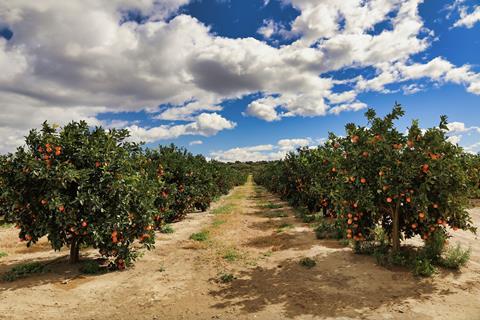
The South African Citrus Growers’ Association (CGA) has released its first export crop estimates for 2026 amid uncertainties caused by the war in the Middle East and other world events.
The CGA said that estimates of all varieties were available, excluding late mandarins, which make up the bulk of the mandarin crop.
“Although late mandarin estimates are only expected in a month’s time, should the historic trajectory within this mandarin category be taken into account, the total citrus exports across all varieties is expected to increase by approximately 3-5 per cent, reaching a total of 210-215mn 15kg cartons in 2026,” said the CGA.
Last year South Africa exported just over 203mn cartons. “We are acutely aware of the uncertainties the industry faces with the current war in the Middle East’s potential effect on demand, shipping, fuel availability and input costs,” said Boitshoko Ntshabele, CEO of the CGA.
“However, should all that is possible be done to limit the impact of these factors, steady growth towards another record export season is within reach,” he noted.
He said the CGA had invested significantly in its data and market intelligence capacity, as well as specialist monitoring and review forums to make timely adjustments to estimates and support key stakeholders with capacity planning in the logistics chain to help ensure stable supplies to markets.
“The global environment impacting the season will likely mean that everyone will need to be highly responsive and adaptable, but we have weathered such large challenges in the past,” he said.
The CGA said the breakdown of variety estimates indicates a balanced crop for 2026, with fruit of high quality. The industry expects to export some 45.9mn 15kg cartons of lemons, which represents a 10 per cent increase from last year’s exported figure of 41.6mn 15kg cartons.
The increase in lemon exports is due to a significant number of young trees coming into production in the Sundays River Valley, as well as the Senwes (Marble Hall and Groblersdal) region’s recovery from hail damage in past seasons.
Predictions show a figure of 30mn 15kg cartons of Navel oranges, a 5 per cent reduction on 2025’s record exports. It is still, however, in line with the long-term growth trajectory, being a 10 per cent increase on 2024 volumes.
The Navel category is also separated into early/mid-season Navels (13.4mn cartons) and late Navels (16.6mn cartons).
The Valencia orange export crop is also expected to increase by 1.6 per cent from last year’s 62mn 15kg cartons to a figure of 63mn cartons for 2026.
The CGA says that it is important to note that last year saw an exceptional increase in Valencia volumes in practically all regions due to optimal growing conditions. For the current season, yields are expected to normalise, although regional differences need to be considered.
Grapefruit exports are estimated at 15.7mn 17kg cartons. This is a significant 16 per cent increase from the 13.5mn 17kg cartons that were packed for export last year.
“The increase can mostly be attributed to optimal growing conditions; however, early feedback suggests a somewhat smaller fruit size,” the CGA stated. “Wet conditions in the northern areas have disrupted early harvesting of grapefruit to an extent. Favourable weather in the northern regions underpins increased estimates of 4-17 per cent above 2025 volumes; the floods that occurred in January did not cause significant damage to orchards or affect yields.”
Meanwhile the southern growing regions in the Eastern and Western Cape expect lower Valencia production this year (between 7 and 20 per cent down - however, still an increase on the 2024 season) largely as a result of drier conditions over the summer and the natural occurrence of alternate bearing in citrus orchards. An increase in Valencia production in Zimbabwe, as well as the entry of Botswana and Mozambique in this market is also notable.
The estimates of three early mandarin varieties are available, with Satsumas estimated at 1.5mn 15kg cartons, Novas down 3 per cent to 5.6mn 15kg cartons, while clementines project a decrease of 4 per cent, with an expected export figure of 6.2mn 15kg cartons.