Cathy Burns has hailed the passing of America’s first Farm Bill in eight years as delivering ”certainty and stability” for specialty crop growers
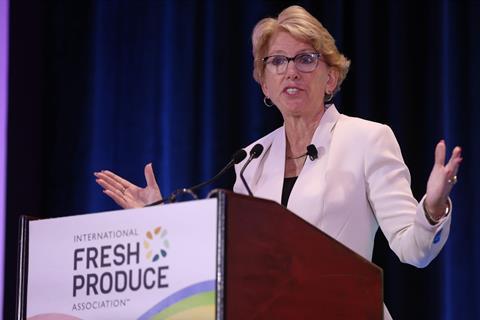
In the US, the House of Representatives has passed the Farm, Food and National Security Act of 2026, some eight years after the last Farm Bill.
Responding to its passing, International Fresh Produce Association (IFPA) president Cathy Burns released a statement welcoming the move.
”The passage of the Farm, Food, and National Security Act of 2026 by the US House of Representatives is an important step toward delivering the certainty and stability America’s specialty crop growers urgently need,” she said.
”Specialty crop growers supply the fresh fruits and vegetables that are foundational to America’s health.
”A strong, five-year farm bill is essential to help these producers weather the unique pressures they face and keep fresh produce on the plate for families across the country,” Burns noted.
”Alongside the Specialty Crop Farm Bill Alliance, we urge the Senate to build on this momentum and advance a farm bill that provides strong support for specialty crop growers and strengthens the nation’s food system.”
Meanwhile, Burns also reacted to the House Appropriations Committee voting to advance its fiscal year 2027 Agriculture, Rural Development, Food and Drug Administration, and Related Agencies funding bill.
“We appreciate the Committee’s recognition of the unique challenges that specialty crop growers face today,” she continued.
”This legislation advances key policies to maintain flexibility in the Specialty Crop Block Grant Program and ensures economic assistance for specialty crops is delivered through mechanisms consistent with the Marketing Assistance for Specialty Crops (MASC) programme, better reflecting the structure of our sector.
”The bill also encourages USDA to preserve vegetable subgroups in school meals, ensuring a wide range of vegetables stay on kids’ plates,” she explained.
”Together, these steps help reinforce the viability of the produce growers who supply our nation with healthy food.”
However, Burns expressed concern by proposed reductions to the fruit and vegetable benefit in the Special Supplemental Nutrition Program for Women, Infants, and Children (WIC).
”WIC serves more than 6mn women, infants, and children at critical stages of development, and its fruit and vegetable benefit is one of the most effective, evidence-based tools to improve diet quality and long-term health outcomes,” she said.
”There’s a persistent misconception that current fruit and vegetable benefit levels are excessive or temporary. The truth is these levels are based on recommendations from the National Academies of Science, Engineering, and Medicine and still cover only about half of a participant’s monthly needs.
”The research is clear,” Burns outlined. ”When benefits are stronger, families buy more fruits and vegetables, increase variety, and children eat more produce.
”Rolling them back would undo that progress and make it harder for families to follow the Dietary Guidelines.”
At a time when diet-related disease continues to strain families and the healthcare system, policy should make it easier for people to choose fresh fruits and vegetables, not harder, she warned.
”Reducing these benefits moves in the wrong direction and risks undermining national nutrition priorities.
”Fruits and vegetables sit at the center of better health, stronger communities, and a resilient food system,” Burns concluded.
”We urge policymakers to preserve and strengthen specialty crops programs and WIC while continuing to support the growers who make these foods available every day.”