During a recent online event, chief commercial officer Karsten Kildahl discussed the Middle East conflict and its ripple effect
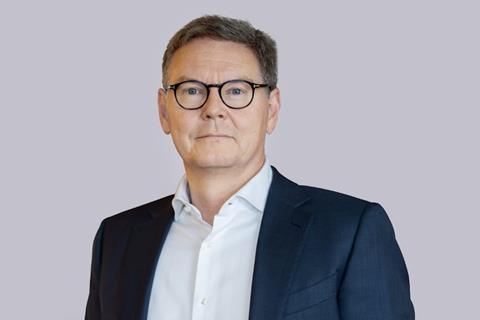
As the conflict in the Middle East continues to disrupt trade flows in and out of the region, Maersk’s CCO Karsten Kildahl has discussed the impact on supply chains and the people affected.
What began as a local conflict has now evolved and is disrupting major land, sea and air corridors — with effects that are starting to reach far beyond the region.
Maersk has said that it is focused on two things: keeping its people safe and helping customers manage the disruptions to their supply chains.
The group pointed out that the human side of the crisis extends far beyond logistics, meaning that safety comes before anything else — for the communities affected, and for its own colleagues working in and around the region.
”Our key focus is of course the safety of our colleagues, people that work directly and indirectly for us, and everybody in the area who is impacted by this,” said Kildahl.
”So far, all our staff, whether in terminals, in ports, on vessels, or in offices around the area, are safe and sound. This is our primary concern.”
Maersk moves around 20,000 TEUs per week into the Gulf region, with a similar outbound volume.
”Our customers with cargo to and from the Gulf are in a very difficult situation,” Kildahl continued. Together, we are trying to find the best possible solution under these circumstances.
”This may involve having containers temporarily stored, having them returned, or identifying a new port to which they can be shipped.
”From there, we are working, where possible, to find alternative transport, so that customers can get their cargo to where they need it,” he said.
”Our focus is on stability and delivering workable solutions in an unpredictable environment.”
Due to the risks and the de facto closure of the Strait of Hormuz, Maersk has paused acceptance of nonessential cargo to and from the region temporarily.
To ensure fundamental societal needs are met, essential goods, such as food and medicine, have been prioritised, it confirmed.
”We are prioritising cargo bound for the region – with food and medicine as the highest priority – and are securing trucking capacity to take cargo into the Gulf from ports outside the area,” said Kildahl.
”For cargo from Europe, for instance, we are mainly focusing on Jeddah and deploying trucks to move the cargo across the desert to its destination.”
The company is assessing cargo acceptance on an ongoing basis with the aim to resume acceptance when possible.
Kildahl also spoke about the growing challenge that is the distribution of fuel globally, something impacting both ocean and air transportation.
”There is currently sufficient fuel globally, but it is unevenly distributed,” he said.
”As a result, we are making changes to our fuel supply chain and begin moving fuel to ensure our vessels can continue to bunker where needed – and protect the flow of trade.
”Through the redistribution of fuel and additional initiatives to optimise our fuel supply chain, we are securing the longer-term stability of our global ocean network operations,” Kildahl added.