Around 95 per cent of the blueberries produced are now consumed domestically
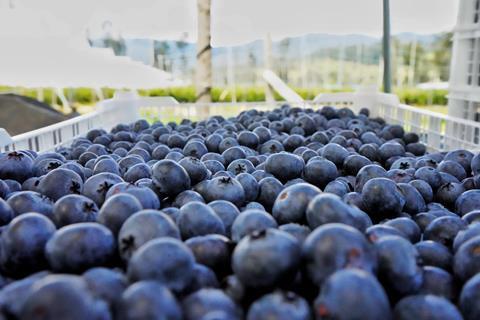
Colombia’s blueberry industry is expanding rapidly, with new investments fuelling a production boom in regions like Cundinamarca, Antioquia, and Boyacá. But the fruit’s growing popularity amongst Colombian consumers is preventing the country from reaching its full export potential.
In 2025, there were approximately 1,000ha of blueberry plantings in Colombia and this was projected by grow by 20 per cent in 2026, highlighting the strong interest the fruit is attracting.
The domestic market absorbs approximately 95 per cent of the country’s blueberry output. Such is the strength of domestic demand, that between January and September of last year, Colombia had to import more than US$10mn of blueberries satisfy it, demonstrating that domestic consumption is growing faster than production.
The sector’s development has driven the expansion of cultivation into traditional areas like Boyacá and Cundinamarca, as well as into new territories in Antioquia, Cauca, the Coffee Region, and Nariño.
According to Camilo Lozano, vice president of Asocolblue, the association that brings together the country’s main producers, Colombia has similar comparative advantages to Peru in terms of climate, soil, labour, logistics, and the ability to produce 52 weeks a year.
Currently, about 90 per cent of Colombian exports go to the US, while Europe is the second largest market. Asia is not yet a viable market on a regular basis due to phytosanitary restrictions and long transit times, which can exceed 30 days by ship.
According to Lozano, Colombia is far from meeting the minimum volumes for sustainable exports. “Today, we have clients requesting five containers a week, and we can’t even fill one. There are only two companies that export consistently by sea,” he said.