Heatwaves and drought lead to smaller potatoes across Europe, as some growers momentarily turn to last year’s glut to cushion the market
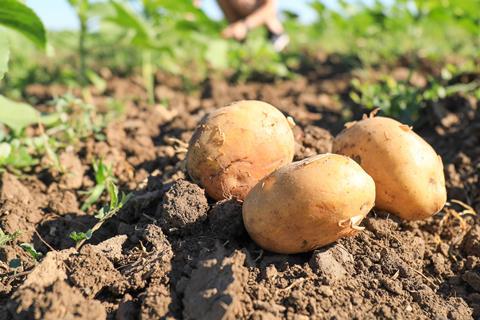
Potato production across Europe has been hit by this summer’s extreme heat and drought, with smaller tubers and reduced yields expected to put pressure on supplies and drive up prices.
New analysis from the Energy and Climate Intelligence Unit (ECIU) estimates that drought and heatwaves will reduce the potato harvest in Germany, France, Belgium and the Netherlands by approximately 3.1 million tonnes compared with the five-year average.
The resulting loss in production is estimated to be worth between €498mn (£423mn) and €818mn (£701mn) across these four countries and the UK.
The ECIU’s estimates are based on industry data and comparisons with average yields over the past five years.
Belgium’s famous chips could be down
As a result, Belgian producers are increasingly concerned about the impact of this year’s poor harvest on the country’s renowned frozen fries industry.
According to the latest harvest prediction from North-Western European Potato Growers (NEPG), Belgium is expected to record the steepest production decline, with total potato output approximately estimated at 3.4 million tonnes, 35 per cent below 2025.
Belgium is the world’s largest exporter of frozen fries, and its potato-processing industry relies heavily on varieties that produce long, suitably sized tubers for processing. However, prolonged heat and drought have affected tuber development, resulting in smaller potatoes and reduced yields.
Belgian producers such as family business De Aardappelhoeve and global frozen potato manufacturer Agristo confirmed reductions in crop yield, potato size and acreage.
Farmers’ organisation Boerenbond has also reported significant losses in Flanders, with yields estimated to be approximately 20 to 21 per cent below the five-year average. However the organisation noted that results vary considerably between individual fields.
Moreover, recent rainfall may have improved growing conditions in some areas, and some stocks remaining from last year’s crop may be able to supply the market momentarily.
Last year, Belgium experienced an unprecedented potato glut caused by favourable weather and decreased consumer and export demand, which in total saw an oversupply of roughly 800,000 to 860,000 tonnes of unsold potatoes.
NEPG stressed the need to switch to varieties that are more resilient to extreme conditions and require less nitrogen, alongside adopting resilient farming techniques to adapt to climate change.
Extreme weather and the future
The impact of this year’s conditions has renewed concerns about the vulnerability of European agriculture to increasingly volatile weather patterns.
The World Weather Attribution (WWA) said this summer’s heatwave temperatures would have been “virtually impossible” 50 years ago.
Tom Lancaster, land, food and farming analyst at the ECIU, said: “As we move into autumn the impact of the record-breaking summer heat and drought on food and farming becomes clear.
“As one of Europe’s thirstiest crops, it was inevitable that the potato harvest would be hit hard, and we are starting to see that now in industry yield estimates,” he continued.
Lancaster said that such weather events underscore the need to bring the climate back into balance by reaching net zero emissions.
“Farmers need a stable climate in order to keep growing this staple of the European diet, without the unsustainable losses that increasingly extreme weather will bring,” he added.