
Wealmoor CEO Avnish Malde tells Fred Searle about the grower-importer’s rich history, his journey into fresh produce, and why supply resilience is in the firm’s DNA
Could you start by telling me a bit about Wealmoor’s structure and history?
Wealmoor is a supplier of speciality vegetables, prepared produce, world foods, herbs, and cook’s ingredients, as well as mango, exotic fruit and asparagus. We operate through a blend of owned production and long-standing grower partnerships across the world.
Wealmoor has vertical integration in a variety of countries, but the roots of the business are in Kenya, where our founder Rati Dhanani began building grower relationships before formally establishing Wealmoor in the UK in 1973. In the 1960s he was invited by Kenya’s first president, Jomo Kenyatta, and the business was set up to contribute to the newly independent country’s agricultural vision.
Kenya remains strategically important to us because, despite evolving growing regions around the world, it continues to make climatic, geographic and economic sense over the medium to long-term. Alongside this, we have had farming bases in West Africa for more than 30 years, as well as operations in Latin America, Spain and here in the UK for over 20 years.
The company was driven by the marketing and supply opportunities Rati saw in those pioneering days. And he was supported greatly by his wife Vilas, who was not only a partner in the business, but immersed herself in the various communities Wealmoor operated in.
She worked tirelessly to support migrant women in Greater London, as well as women and children in India, Kenya and The Gambia. And in 2017 she was recognised for her local and global community work by the late Queen who awarded her an MBE.
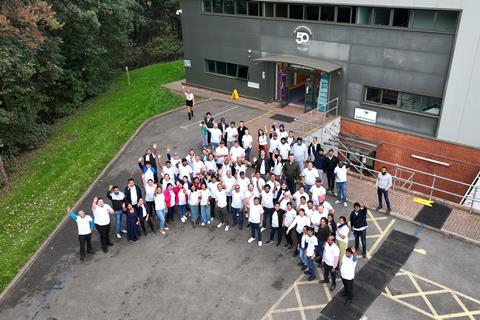
Wealmoor celebrated its 50th anniversary in 2023. How did it begin exporting fresh produce to the UK all those years ago?
In the mid-60s Wealmoor’s founder Rati Dhanani developed the domestic market with his grower partners in Kenya for potatoes and onions to help the country become self-sufficient in staple fresh produce. He then looked at opportunities to export things like green beans, peppers, aubergines and even pineapples to the old Covent Garden Market.
Rati used to have some very good trade there, but he constantly got frustrated with how little buyers understood about the origins of the produce and customers asking him questions like ‘how big are the trees these huge pineapples grow on?!’
He got to a point where he saw an opportunity to set up a marketing arm for the Kenyan business, and that’s how Wealmoor came about. It was a marketing arm for various products such as beans, okra and chillies that were just coming onto the scene in Britain.
Tell me more about your personal journey into the fresh produce industry and how your career at Wealmoor began.
I came to the UK from Kenya at the age of eight with my family, along with many other members of the Indian community in Nairobi. There was significant upheaval in East Africa in the mid-70s, and my parents saw wider opportunities in terms of jobs, careers, education, and overall stability here in the UK to build a future. We came with very little, but what we did have was community and a strong belief in education and hard work.
For me, the big turning point was joining Wealmoor as a management trainee, following a couple of years in the car industry after studying economics at uni. Rati and Vilas were very entrepreneurial and were constantly finding new sources for the exotics and premium veg that Wealmoor supplied. But when I joined the business in 1990 as a management trainee, it was still a small family business.
It was hands-on sales work during the day and then helping to pick and assemble orders in the evening. It was fully immersive and I learned very quickly what it takes to build something real.
When I joined, Wealmoor was turning over £8 million without a direct retail trade, but it was only a couple of years into my job that Rati challenged me and said we should really be supplying our products direct to the retailers. It proved to be a platform for a range of premium vegetables and exotics, such as mangetout and mangoes, to become almost everyday staples in the UK.
You have since risen through the ranks at Wealmoor during your 35 years at the company, becoming CEO in 2016. What is your vision for Wealmoor over the next five years?
I want to build an even more system-led business – stronger end-to-end planning, better data visibility, and smarter automation – while staying true to the values that have got us here. That’s how we’re going to improve productivity, reduce waste, stay resilient, and keep delivering for our customers in an ever-changing environment.
There are mounting pressures on fresh produce suppliers at the moment. What have you been doing to build more resilience into your supply model?
We have been strategically diversifying risk and building resilience for over 25 years – first in East Africa and West Africa, then in North Africa and Spain, and more recently in Latin America. We have been deliberate in our investments, building innovative, commercially viable global and local supply chains that complement one another in highly competitive and challenging environments.
For example, in India I spent a lot of time in the early noughties working with new growers and government to build commercially viable supply chains. At that time, trying to get a product out of Delhi Airport took four days because of all the bureaucracy, so we got the government of the state of Rajasthan to come and visit our operations in Kenya, where you could pick one day, fly product the next, and see it on the supermarket shelf on day three.
In the late 90s and early 2000s we also introduced our UK grower partners to premium vegetables like Tenderstem, sugar snaps, fine beans, and baby vegetables – because, strangely, in places like the Vale of Evesham the microclimates almost mirror those in Kenya.
The point is that resilience is about far more than simply having multiple origins. It is about building stronger end-to-end planning, governance and supply structures that can withstand volatility.
How concerned are you about the environmental impact of and consumer attitudes towards airfreight given Wealmoor’s reliance on it?
It’s a valid concern and we take our environmental responsibility very seriously. But sustainability is about more than just reducing air miles. It’s holistic. Some products and regions naturally lend themselves to airfreight – small volumes, short seasons and developing economies where livelihoods depend on access to markets.
It’s not a light switch – you cannot move from air to sea freight or switch sources at the drop of a hat. We’re constantly working with all stakeholders to manage that balanced equation of freshness, sustainability, commerciality, and supporting communities. And we’ve substantially reduced our reliance on air freight in the last seven years through smarter logistics, modal shifts where possible (for example in peas and beans), and by reducing waste.
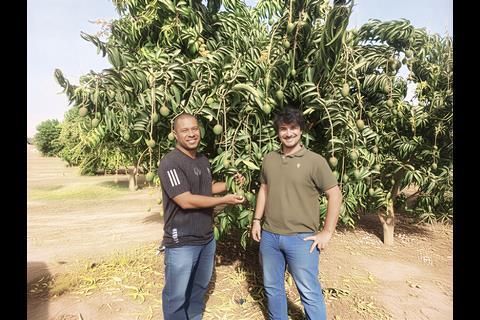
Wealmoor is a major producer of mango, asparagus and fine beans and owns several thousand hectares of production across Peru, Kenya, The Gambia, Spain and the UK.
In addition, the supplier works with partner growers that it has helped to harness and develop, often over decades, in countries including Senegal, Brazil, Morocco, Egypt, the Dominican Republic, China and Côte d’Ivoire. Through these growers, Wealmoor supplies products such as beans, peas, mangoes, papayas, ginger, and various exotics.


