The region generates 32 per cent of the bloc’s total volume, positioning Spain as the second largest producer in Europe after Poland
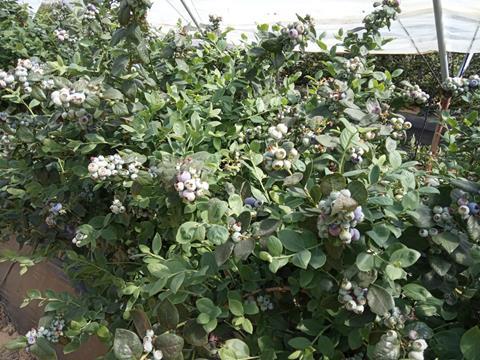
Andalusia has established itself as one of the major blueberry production centres in Europe, accounting for approximately 32 per cent of the total produced in the European Union. This makes Spain the second largest producer in the EU behind Poland, which leads the ranking with a 33.7 per cent share.
The data is set out in a new report from the Andalusian Regional Government’s Price and Market Observatory for the 2024/2025 season. Almost all of the autonomous community’s blueberry production is concentrated in Huelva, which accounts for more than 94 per cent of national production, reinforcing the province’s role as a key player in the sector in Spain and one of the main producing regions on the continent. In 2024/25, Andalusia produced an estimated 66,600 tonnes of blueberries, 16.3 per cent more than the previous season. This was due to both an increase in cultivated area and improved yields per hectare.
The total area dedicated to blueberry cultivation in Andalusia rose to 4,700ha in 2024/25, a year-on-year increase of 4 per cent and an 11.9 per cent increase compared to the average for the 2021-2024 period. Average yield stood at 14.8 tonnes per hectare, 16.8 per cent higher than the previous season, after several years marked by greater production volatility.
According to the report, 75.3 per cent of the blueberries grown in Huelva are cultivated under integrated production systems, while 19.2 per cent are organic. Andalusia plays a key role in Europe’s fresh blueberry trade. Together, EU countries export 47.3 per cent of the blueberries traded globally, with Spain and the Netherlands as the main sources within the bloc. Spain contributes around 11 per cent of global exports, while in the EU market, Andalusian blueberries are a key supplier, especially during the peak months of the season.
The report also shows that Andalusia exports more blueberries than it produces, as local supply is supplemented by imports, primarily from Morocco. This dynamic reflects the strength of European demand and the region’s role as a commercial and logistical hub for blueberries in Southern Europe.
Overall, the data shows that blueberries have become one of the most strategically important crops for Andalusian agriculture, not only due to their production volume but also because of their impact on foreign trade, job creation, and their ability to position Andalusia among the leading agri-food producers in the EU.