Investment in active projects to improve road infrastructure and drainage totals US$7mn
Hundreds of residents of communities near banana plantations in Costa Rica’s Caribbean zone now have improved road infrastructure, drainage systems, and protective works thanks to contributions from the Special Fund for Prevention and Infrastructure (Fepi), administered by the National Banana Corporation (Corbana).
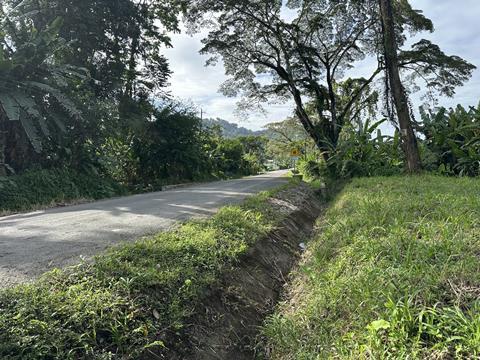
In coordination with local governments and state agencies, Fepi completed four projects in 2025 with an investment of almost US$2mn, of which it contributed 54.98 per cent of the total funds. It is currently working on seven projects expected to be completed in 2026, with a budget of more than US$7mn.
“Each box of bananas that Costa Rica exports represents a valuable contribution invested in the socioeconomic development of rural communities on the Atlantic Slope and in Parrita, southern Puntarenas,” Corbana said.
Fepi coordinator, José Pablo Mora Apuy, pointed out that among the benefits of these projects are the reduction in maintenance costs for roads that were previously gravel, as well as the reduction of dust generated by truck and light vehicle traffic, which directly impacted the health of people living near or traveling on these roads.
“Furthermore, the projects include infrastructure works related to drainage and surface water management, which directly contribute to reducing diseases such as dengue and chikungunya, transmitted by mosquitoes that breed in stagnant water in several communities in the cantons of Matina and Talamanca,” he said.
Among the initiatives currently underway are two road improvement projects in the districts of Duacarí and Río Jiménez, in Guácimo; the construction of a vehicular bridge over the Canalón River in La Laguna de Imperio, Siquirres; the rehabilitation of the drainage system and improvement of the road surface with asphalt paving on National Route 813 between Matina and Mawamba; the maintenance of the canals in Limón; the design of the bridge over the Sirena Creek on National Route 249; and the Perdiz-Santa Elena road project, the latter two located in the canton of Pococí.
“This was a road that, despite being a National Route, was unpaved. The excessive dust caused many health problems for the population, which will be eliminated with the new paved road. Additionally, having quality road infrastructure allows us to increase the region’s competitiveness, promote trade and other activities, which generates employment, opens the door to better opportunities, and improves the quality of life for the population,” Mora commented regarding the work on National Route 813.
He added that more than US$4mn will be invested in flood protection works along the banks of the Matina River, one of the areas most vulnerable to flooding.