Industry highlights ongoing sustainability efforts but says cost must be borne by whole supply chain
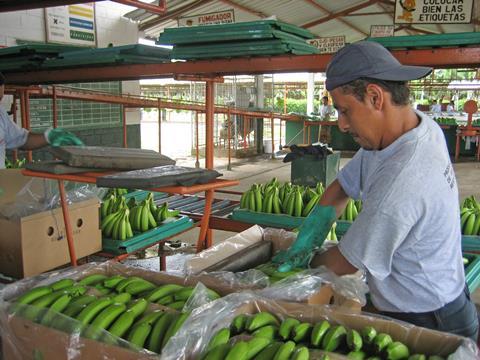
Ecuador, the world’s largest banana exporter, has added its voice to demands for a fairer pricing model and greater recognition of the true costs of sustainability ahead of next week’s Fruit Attraction.
The Ecuadorean Banana and Plantain Cluster will host a roundtable discussion at the fair entitled ‘Beyond the fruit: The social and environmental impact of Ecuadorean bananas worldwide’, at which it will argue that the investments producers are required to make in environmental certifications, living wages and safety are not reflected in sales prices in markets like Europe, which is the most demanding of all when it comes to sustainability.
“The European Union – which purchases nearly a third of Ecuador’s banana exports – are increasing requirements for traceability and environmental transparency. At the same time, some European supermarkets sell the product to consumers below its actual value through aggressive discounting,” the cluster said.
Although Ecuador’s banana industry already operates under international standards and certifications covering good agricultural practices, environmental protection, working conditions, and responsible trade – and pays wages 16.8 per cent higher than the US$495 living wage benchmark for Ecuador calculated using the Anker methodology – it argues that market requirements continue to rise.
“It is no longer just the quality of the fruit upon arrival that is evaluated; how it was produced, the impact on natural resources during the process, and the social and labour conditions under which the activity took place also matter,” the cluster said.
“For countries like Ecuador, this means production is increasingly subject to verification and measurement processes, as well as the need for technological upgrades, more efficient irrigation systems, and biosecurity measures.”
The industry’s longstanding objection is that the costs of these requirements fall on the producers at the start of the supply chain rather than being shared with importers, retailers, discount stores, or end consumers.
It argues that this is not sustainable over the long term, especially as a significant portion of production comes from small and medium-sized growers.
Despite the inequity, the cluster insisted that sustainability efforts would continue, with efforts currently underway to implement a system to measure water and carbon footprints across the entire supply chain.
The initiative is part of a project titled Accelerating the sustainable transformation of the Ecuadorean banana industry, which aims to extend these measurements to at least 150,000ha of production.
“The goal is to obtain standardised scientific data on two variables of growing importance to international trade: the amount of water required to produce bananas and the volume of greenhouse gas emissions generated by the process,” the cluster explained.