Recommended rates to increase as producers face up to extreme weather, disease, and rising sustainability costs
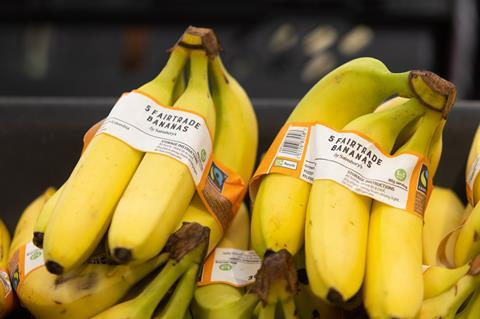
Fairtrade International has announced that it has increased its recommended minimum prices for bananas.
The move, it said, is in direct response to ”a combination of external pressures negatively impacting producers”, including geopolitical instability, climate change, and rising input and logistics costs.
The new rates were revealed today (5 October) on the eve of Fruit Attraction 2026.
The average official Fairtrade Minimum Price for bananas has increased by 5.6 per cent at ex works level and by 3.9 per cent at free-on-board level, with variations by origin.
New minimum prices for bananas, approved by Fairtrade International’s Standards Committee in September, will be valid for contracts with producers beginning on the 1 January 2027.
The organisation’s Minimum Price system is updated each year. However, this year’s increase is ”significant”, Fairtrade noted, and is a direct response to the pressure that producers are facing.
Extreme weather events, including El Niño, pests and diseases, such as Fusarium Tropical Race 4, as well as rising production and sustainability costs, are affecting productivity and demand a significant investment in resilience and sustainable practices, it said.
“Banana producers are at the beginning of a supply chain that is increasingly exposed to global shocks, yet they often have the least ability to absorb additional costs,” said Silvia Campos, senior advisor, banana, at Fairtrade International.
“Fair and sustainable supply chains require shared responsibility. That starts with prices that reflect the real costs of sustainable production, alongside long-term sourcing and collaboration to build resilience.”
Price review
The Banana Price Review 2026 was conducted in accordance with Fairtrade’s Standard Operating Procedure for setting both its minimum prices and the full-price research methodology.
The review used validated production cost data from certified producers, technical assessments to address data gaps or non-available data, and consultations on 47 Fairtrade Minimum Prices across nine origins and two country clusters.
In total, 114 certified producers, exporters, importers, and retailers participated in the consultation process.
”Fairtrade continues to have in-depth conversations with stakeholders, especially producers to understand the issues and support with solutions that will enable banana producers to thrive,” the organisation continued.
”Producers noted that Fairtrade’s pricing methodology is a valuable model for bringing transparency to production costs across regions and supporting livelihoods.”
Fairtrade’s core pricing components include Fairtrade Minimum Price, Fairtrade Premium, the Living Wage Reference Price and the Fairtrade Living Wage Differential.
Global pressures
Emmerson Aguirre, president of Asociación de Bananeros de Colombia (Augura), explained that pressures facing the banana sector are overarching and global.
“We are not simply talking about the margin of one producer… we are talking about the ability to pay decent wages, sustain formal employment, protect the environment, and meet the standards the market demands of us,” he said.
Jose Antonio Hidalgo, Executive President of Association of Banana Exporters of Ecuador (AEBE), added that the demands on the sector are growing as well.
“We are also investing heavily in environmental, labour and social sustainability,” he added. “These are investments we support and believe are necessary, but they are not cost-free.”
Fairtrade said that it continues to encourage all actors in the supply chain – producers, exporters, traders, retailers, government authorities, and civil society organisations – to promote fair prices and fair trade to improve the livelihoods of banana farmers and workers.