Report urges industry-wide collaboration as table grapes face intensifying competition from chocolate, crisps, and healthier snack alternatives
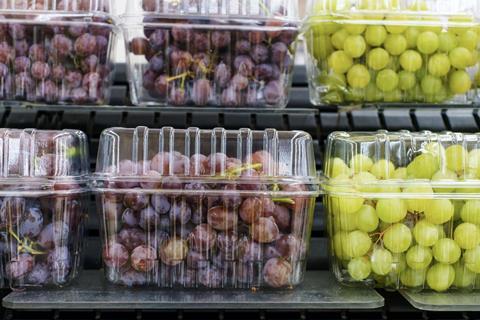
Many fruit categories have in recent years sought global cooperation in a bid to advance the interests of their product in what are increasingly competitive markets.
Competition exists not only between fresh produce categories, but also comes from other areas such as snack foods.
In the fruit world, cooperation across world’s avocado industry to boost consumption is used as an example of strong collaboration.
The production of the first Global Table Grape Report – published by the Global Table Grape Group – is seen as a similarly worldwide initiative to promote the interests of the fruit, perhaps at consumer level where the category has been under threat from competing products.
The report describes the next decade as ”crunch time” for the international business.
“Now is the moment that will define where our grape industry will be for the next ten years,” said Ignacio Caballero, president of Global Grape Group.
The report is produced in service of the global table grape industry and its stakeholders, with the conviction that a more informed and transparent industry is better equipped to make sound commercial and strategic decisions.
“This first edition of the Global Table Grape Report brings together production, trade, market, and industry data from around the world, complemented by contributions from participating member organisations of the Global Grape Group,” he noted.
“Our objective has been to establish a common statistical foundation from which the industry can better understand where table grapes are produced, how supply is evolving, where fruit is moving, and how the importance of different origins and markets is changing over time.”
Caballero said the report is published ”in a changing world, where old rules stop working, where one crisis can affect consumer trust, where the cold-chain logistics that used to be the industry’s competitive edge are now in question, where a strong El Niño forecast for 2026/27 threatens critical harvest windows, and where, every year, more conflicts impacting geopolitics and logistics worldwide is affecting the world industry”.
“Now is the moment, when market trends show us that competitors like chocolate and chips are investing around 5-10 per cent of their revenue in promotion, allowing them to grow 4-8 per cent; where new consumer trends are pushing new categories like healthier/better-for-you/snack bars; and when other produce categories are investing strongly in penetration, such as avocados,” he outlined.
”This is the moment when those involved can join the new Global Grape Group to work together to create this ‘new blue ocean for grapes’,” Caballero commented.
“Our first step was to show the world in which we exist, secondly to gain new members and to present to the industry added value.”
Colin Fain, CEO of Agronometrics and editor of the report, pointed out that the grape industry has become increasingly global.
Production continues to expand across established and emerging origins, varietal development is reshaping supply, and commercial windows increasingly overlap as exporters compete across common destination markets.
Understanding any individual producing country therefore increasingly requires understanding the global environment in which it operates, he added.