Producers cautiously optimistic after high-level EU-Mexico talks signalled political will to resolve outstanding market access issues
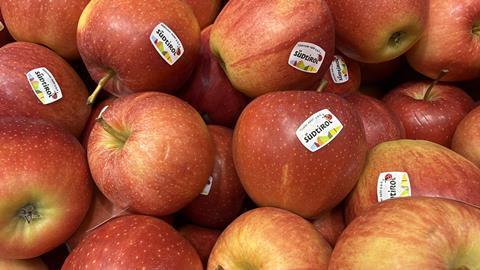
An agreement by Mexico to remove tariffs and other restrictions on a range of imported fruits from Europe offers Italy’s apple producers an excellent opportunity to develop a new and important alternative market.
Speaking at Interpoma in Bolzano, the director of industry association Assomela, Giovanni Misanelli, told Fruitnet he welcomed the news that there was political will on both sides to speed up work on removing such barriers.
Improving access to such a large new market, he said, could be a major breakthrough for Italy as the world’s biggest apple exporter, and for trade which was worth more than a billion euros during the 2025/26 commercial season.
“We see Mexico as a very good prospect in export terms given it has a population of around 130mn people,” he commented. “That’s because in part, we’re not just talking about Mexico City but also a number of other major cities. And it could represent a good alternative for example to markets in the Middle East where we have had some difficulties recently.”
More than half of Italy’s fresh apples are exported, and almost half of those exports go to third countries outside the EU, he observed. “For example, we have Brazil where we export more than 40,000 tonnes sixth most-important, making it our sixth-largest export market.”
Faster action ahead
High-level trade meetings involving representatives from the European Commission and Mexico’s Ministry of Agriculture took place in Mexico City in mid-November, with a focus on improving market access conditions for a range of EU food products under the modernised EU-Mexico Free Trade Agreement.
Following talks between EU Commissioner for Agriculture and Food, Christophe Hansen, spoke with Mexico’s Secretary of Agriculture and Rural Development, Columba López Gutiérrez, the Commission announced that the two sides had agreed to resolve outstanding bilateral market access issues relating to products including apples, kiwifruit, and chillies.
However, while those agreements are expected to come into effect as early as mid-2027, it will take longer for them to be ratified and put into practice.
“Nothing is open yet in terms of market access,” said Philippe Binard, general delegate of Freshfel Europe, who was in Mexico with Hansen as part of a sizeable EU trade delegation, “but the political will is now there on both sides to get a number of PRA (pest-risk assessment) dossiers approved which have been pending, in many cases for several years.”
These include applications for Italian and Polish apples, as well as Greek kiwifruit.
Mexico already permits free market access to a number of European fruit exports – among them Spanish stonefruit, French apples, and Belgian pears.