The non-profit organisation brought together growers, marketers and licensees from major production regions worldwide
The International Pink Lady Alliance (IPLA) has announced its closure after celebrating 25 years of global industry stewardship.
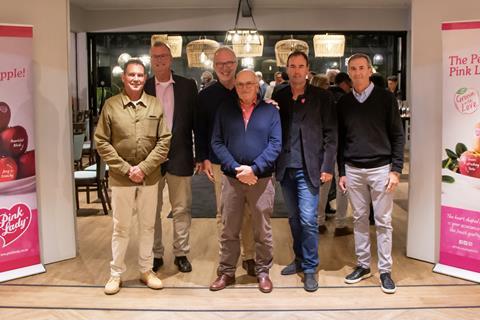
This month the IPLA came together to celebrate its 25th anniversary, during which It also announced that it had fulfilled its mandate.
It was a predetermined decision following the event, which attended by all the IPLA’s international members in South Africa.
“This occasion marked both the conclusion of a significant chapter in the organisation’s history and an opportunity to reflect on its role in the growth and stewardship of the Pink Lady brand over the past 25 years,” said the Alliance in its final communique.
The closure marks the end of a non-profit organisation that played a central role in building a collaborative international framework around one of the fresh produce industry’s most recognised premium apple brands.
Oversight of global policy matters, licensing frameworks and brand alignment, which in the early years rested with the IPLA, are now undertaken by the Pink Lady brand owner, Apple and Pear Australia Limited (APAL).
As part of APAL, Twenty Degrees, the wholly owned commercial arm of the APAL Group, is responsible for the global development, brand management and licensing of APAL’s intellectual property and premium produce brands, including Pink Lady.
“For more than two decades, the IPLA provided a forum through which growers, marketers, licensees and industry leaders from a range of production regions and markets could work together in pursuit of shared objectives,” the association continued.
”These included brand development, quality control, licensing alignment, market expansion, variety stewardship and collective discussion on matters of long-term strategic importance to the Pink Lady business.
“After years of dedicated stewardship by the IPLA, its role concludes with the confidence that the Pink Lady brand continues to be managed with strong efficiency, continuity and strategic focus under APAL’s leadership,” it noted.
The origins of the IPLA lie in the formative years of the Pink Lady brand, when industry leaders recognised that the long-term success of the Cripps Pink apple and its associated brand proposition would extend beyond plant material, trademarks or commercial agreements.
“It would certainly require collaboration across countries, alignment across markets and a shared commitment to protecting brand integrity,” IPLA said.
”Informal international meetings from 1996 onwards laid the groundwork for a more structured alliance built on the understanding that Pink Lady would be stronger if key stakeholders could contribute, exchange information and solve problems collectively.”
From the outset, it brought together representatives from the major Pink Lady production regions and all master licensees, including Apple and Pear Australia Limited, Pink Lady Australia, the New Zealand Pink Lady Growers’ Association, Los Alamos de Rosauer in Argentina, Viveros Requinoa in Chile, Pink Lady South Africa, TopFruit in South Africa, Association Pink Lady Europe, Star Fruits Diffusion in Europe, Brandt’s Fruit Trees and Pink Lady USA.
Over time, the network support through the IPLA extended to additional territories and delegates, for instance Asoex Chilean Pink Lady Ass, Sub-Committee, Frutec (Uruguay) and Pink Lady Japan, reinforcing the organisation’s international character.
Perhaps one of the most important parts of the IPLA’s contribution was the human dimension that developed alongside its formal work.
Annual meetings in member countries created opportunities for governance discussions and strategic decisions, but also for personal interaction, cultural exchange and the development of longstanding professional relationships as well as cherished friendships.
“Over time, many members came to regard the IPLA as an international community as much as an organisation,” the association added.
”Reflections gathered for the 25-year commemorative book speak consistently of friendships formed through travel, meetings, dinners, site visits and shared experiences across countries and cultures.”