Market update cautions that rising costs, crowded supply calendars and the need for stronger consumer engagement pose challenges
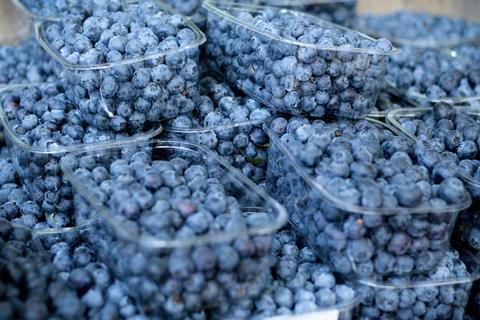
Rabobank has released a global blueberry market update for 2026, looking at production, trade flows, price and purchasing habits.
In its November report, Rabobank noted that fresh blueberry exports are likely to exceed 1mn tonnes in 2027/28, led by Peru.
“Global fresh blueberry exports are expected to ease in 2026/27 as El Niño weighs on Peruvian production, before exceeding 1mn metric tons in 2027/28,” it confirmed.
The range of production origins continues to expand, with Rabobank emphasising the emergence of China as a regional exporter, as well as the increasingly crowded supply calendars in Europe and the US.
Morocco, South Africa, and other emerging origins will continue to add competition across more weeks, it said.
Analysis showed that rising labour, input and logistics costs are increasing margin pressure, with blueberry prices not keeping pace.
”The right genetics can improve marketable yield, fruit quality, harvest efficiency, and input-use efficiency, but performance depends on local growing conditions, production systems, and market fit,” Rabobank outlined.
“Variety selection and agronomic execution will become increasingly important to profitability.”
It pointed to the “considerable” consumption potential blueberries still hold, as Europe, Asia and other markets increase their share of global imports.
However, Rabobank warned that greater availability will not automatically translate to sustained demand, with mature markets requiring deeper penetration, higher purchase frequency and a greater range of eating occasions.
Emerging markets, meanwhile, need investment in awareness, affordability, distribution, and suitable packaging formats, it said.
The cooperative bank also highlighted the growing interest in blueberries online, pointing to rapidly rising blueberry searches in Spanish- and Portuguese-language markets that “may signal untapped market opportunities”.
The report was authored by RaboResearch Food and Agribusiness Fresh Produce sector team members David Magaña, Cindy van Rijswick and Gonzalo Salinas.