Fred Searle speaks to Wim Destoop, global chief customer officer of Westfalia Fruit, about the avo supplier’s customer-led marketing strategy, the potential of the Gem variety, and the growing importance of supply diversification
Could you start by outlining how the past six to 12 months have unfolded from a marketing perspective, and where you see the key opportunities to boost sales?
Certainly. By way of introduction, I joined the company two years ago after a long career at PepsiCo, where brand management and customer development are core disciplines. That background has strongly shaped my approach.
At Westfalia, we have been strengthening our focus on becoming even more customer-led. Historically, our organisation has operated through regional teams across Europe, Africa, South America and Asia. At the same time, we continue to improve how we work globally to better align supply, demand and customer needs.
Today, our activities are closely aligned around three core areas. The first is Farming Operations and Sourcing, which focuses on procurement and upstream activities.
The second is Supply Chain, responsible for aligning demand and supply, while ensuring quality standards are consistently met.
The third area, which I lead, focuses on the global demand side, covering customers, shoppers and consumers. The aim is to work much more closely with our retail partners to understand shopper behaviour, develop the category and create sustainable growth together.
Feedback from a survey we conducted with customers and suppliers made it clear that retailers want more than operational excellence. They are looking for partners who can actively grow the category.
In response, we created a dedicated customer marketing and development function. This team leads joint category and business planning, category development, insights, and brand strategy discussions. We are investing more heavily in understanding avocado consumers and shoppers, to create growth plans tailored to individual retail partners, underpinned by actionable insights.
What have you learned about avocado consumers in the UK and Europe, and how do you plan to use those insights to help grow the category?
We analyse the category through the lens of consumption occasions. Avocados – and avocado-based products – serve multiple occasions, and we view ready-to-eat products as a distinct and complementary segment, giving consumers a quick and convenient way to enjoy a fresh fruit. That includes smashed, spreads, guacamole, and IQF formats. We acknowledge that retailers need a complete avocado portfolio to serve all consumption occasions efficiently and effectively.
Consumer behaviour varies significantly by market. For example, in Germany, avocado consumption is heavily skewed towards breakfast occasions. Ready-to-eat formats, such as smashed avocado pots, appeal to time-pressed consumers looking for a quick solution before work.
In the UK, we have seen strong results from merchandising ready-to-eat products alongside whole fruit, this gives shoppers an optimum solution for now and later. Placing avocado products next to wholehead avocados led to a significant sales uplift. Rather than cannibalising core sales, the products proved complementary: shoppers buy ready-to-eat for busy days and whole fruit for time-rich occasions.
Store placement is also critical. In France, for example, moving avocados closer to salads and tomatoes – reflecting how they are typically consumed – drove growth. These relatively simple category tactics have had a meaningful impact.
What is your strategy with Westfalia Fruit’s Gem avocado variety?
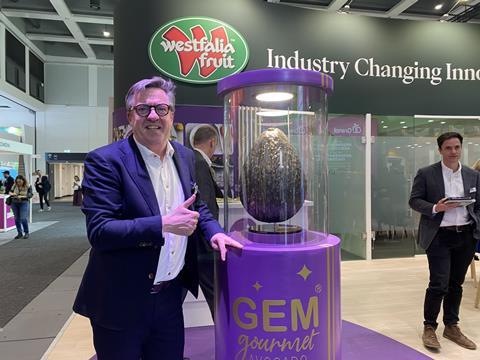
Gem is an exciting premium cultivar with an exceptional eating experience. Our research shows shoppers are willing to pay more for a better eating experience. We are working with growers around the globe to fulfil year-round supply. We source from countries including South Africa, Spain, Portugal, Chile and Peru.
In Europe, our main Gem markets are the UK, Germany and the Netherland, and currently we are expanding to Southern Europe.
Our strategy is to grow Gem incrementally, allowing us to capture more value in the category, reflect consumers’ desire for taste, and ensure growers are rewarded appropriately to incentivise further plantings.
Do you see potential for Gem in Asia?
Absolutely, yes. There is a clear interest in strategically introducing Gem in Asian markets. As these markets are still at an early consumption stage of avocado, we have the opportunity to educate consumers and shoppers about the different eating occasions that avocados are suitable for.
We are also exploring opportunities in ready-to-eat formats, such as premium guacamole made with Gem.
More broadly, what two or three things must the industry get right to boost avocado consumption in the UK?
There are two things that can be done immediately to boost avocado consumption. Firstly, avocados are relevant to a multitude of dishes and occasions. They are diverse, nutritious, and wonderfully delicious. With this in mind, we must unlock untapped consumption occasions. You can eat avocados throughout the whole day. Working with retailers on joint category growth plans will unlock this opportunity.
Second, retailers have powerful marketing and data tools that help us understand their shopper behaviours. In some markets, we have access to this information and are already working to influence shopper behaviour based on the insights extracted from certain tools. Incremental growth has been seen by activating insights through different platforms such as in-store media, digital, recipe content, and loyalty cards.
Turning to supply, how would you characterise the global avocado market over the past year?
There were concerns that increased Peruvian volumes would lead to oversupply and price pressure in Europe. In practice, due to high consumer demand, the market absorbed the fruit well. The forecast is that volume and demand will continue to rise significantly.
We operate in an exciting category. Avocados have moved beyond a trend. It is fashionable to eat avocados. In fact, it is becoming a lifestyle. In Europe we have well-established markets that are high in consumption and steady in growth. More lately, we have seen strong growth coming from markets like Italy and Eastern European countries. Also, Asia and the Gulf region are showing great developments for avocado consumption.
How are you managing climate and supply risk, particularly given recent disruptions?
Diversification is essential. In Africa, Kenya and Tanzania are increasingly important origins. Colombia also offers potential. And Europe itself will play a crucial role in the production of avocados. More growers are looking into Portugal, especially coastal areas near Lisbon, where climatic conditions are favourable. We already have production there and are evaluating further expansion.
Customers are also increasingly interested in closer-to-market sourcing, both for resilience and sustainability reasons. Recent congestion at London Gateway Port illustrated how vulnerable supply chains can be to logistical disruption.
Ultimately, the avocado category is shaped by nature and global logistics. The only way to remain resilient is through geographic diversification, strong partnerships, and disciplined demand planning aligned with sustainable value growth.