As imports leave UK vulnerable to price and supply shocks, Government urged to support farmers using peas and beans as natural fertiliser to cut pollution
The government must “plan ahead” to protect food security and the environment as farmers face escalating fertiliser prices, a new report from the Sustainable Nitrogen Alliance (SNA) has said.
The report, which examines how the UK might cope if synthetic nitrogen fertiliser (SNF) becomes less available or too expensive for farmers to use, said the UK’s food security, rivers and wildlife depend on helping farmers reduce dependence on SNF.
While nitrogen is an important nutrient used in soil for plant growth and food production, its manufacture and overuse as a synthetic fertiliser causes harm to the wider environment.
Fossil fuel emissions released from synthetic fertilisers are the third largest contributor to climate change after carbon dioxide and methane.
According to government data, 99 per cent of England’s protected nature sites are suffering from too much nitrogen in at least one part of their habitat. This has harmed biodiversity such as wildflowers, which implicates bees and other pollinators.
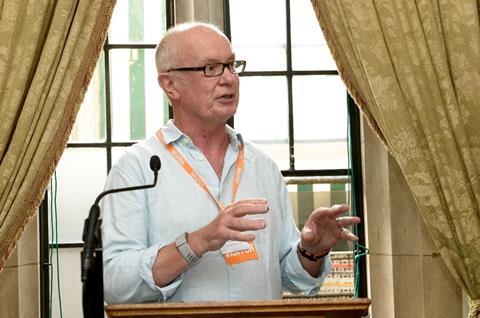
Gareth Morgan, head of farming policy for the Soil Association said: “This is a matter of national security. The government must plan ahead to create a funded transition away from fertiliser, rather than leave farmers and the UK’s food supply dangerously exposed to market shocks.”
The raw material for SNF is natural gas, a fossil fuel that has experienced great price volatility in the past few years.
Morgan continued: “Disruption in the Strait of Hormuz this year brought to attention just how dependent the UK’s food production system is on imported inputs. Figures recorded by Defra highlighted how a fifth of farms failed to make a profit in the 2024/2025 year, with fertiliser costs often making up a significant proportion of controllable farm expenditure.”
The SNA, which is a coalition of 13 environmental organisations established in 2021 by the Soil Association, Plantlife and WWF, has called on the UK government to support farmers using nature-friendly approaches to fertiliser, such as mixed farming and nitrogen-fixing plants such as peas and beans.
Planting crops such as legumes, pulses and clovers, which pulls nitrogen from the atmosphere into soils, are a natural alternative to synthetic fertiliser.
Organic farmer John Pawsey of Shimpling Park Farm, based in Suffolk, is trialing different pulses that haven’t traditionally been grown in this country, like chickpeas and lentils. He said practices like intercropping (where two crops are grown together) can improve soil health and strengthen food production.
“In times of instability where input costs are very high, there’s no doubt that organic farm systems or systems that use less or no artificial nitrogen fertilisers are better placed to cope,” he said.
“The more crops you grow on your farm with different sowing dates, different types of crops, doing different things to the soil, you naturally build resilience into your system,” he added.
The SNA underlined that government support for low-input farming, including payments for organic conversion and management through initiatives such as the Welsh Sustainable Farming Scheme and the English Environmental Land Management Scheme, will be central to achieving the long-term benefits of reducing dependency.
Morgan added: “In the long-term, farms moving towards a lower-input or organic system should see more stable income, but they need help to make the change as they can face an income shortfall in the early years.”
Other support required from the government includes tracking annual nitrogen use and developing a strategy following to reduce dependency following this assessment. Moreover, the SNA called for incentives and regulation to acceleratie action on food waste and healthier diets aligned with reduce synthetic nitrogen fertiliser-dependent food production.