
The Kent-based company, which previously supplied vertically-grown leafy salads, is exploring strawberry propagation amid challenging trade conditions
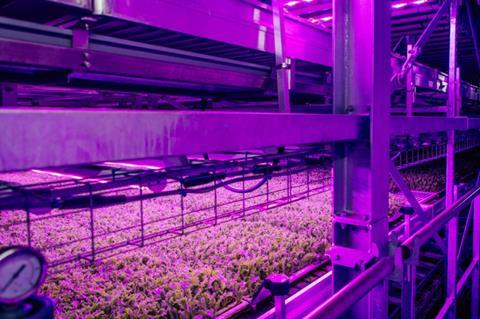
Vertical farming business GrowUp Farms has shifted away from commercial babyleaf salad production, and has started exploring strawberry propagation as it looks for a new market position.
The move comes after challenging trade conditions in the vertically grown leafy salad sector, with high energy costs and demand variability putting pressure on the business, Marcus Whately, non-exec director of GrowUp, told FPJ.
GrowUp was acquired by private equity firm Sun Capital in December after reporting losses of almost £4 million and subsequently entering administration.
Whately said the company has spent the last nine months assessing where the business could be best positioned commercially.
“The last deliveries [of babyleaf] went out a couple of weeks ago,” he said, adding that GrowUp had since made some redundancies within its salad production teams.
He attributed the decision to “highly challenging trading conditions” facing vertically-grown leafy salads.
“The team have worked through the production costs, not just from the Iran war but structural changes in the UK energy market.” Whately said. “Every fresh produce grower will know electricity costs have doubled, and it’s been a very significant cost pressure for us.”
He added: “I think there’s a major and silent problem going on across the industry about the way that energy costs are imposed on growers and businesses are driving substitution of imported products.”
Variability in demand also created difficulties for a highly controlled production system, with demand rising sharply during this summer’s heatwaves but falling at other points. “A controlled production facility is fantastic because it’s reliable and produces the same amount every day - but fresh produce demand is variable,” Whately said.
Strawberry opportunity
GrowUp has begun exploring strawberry propagation, which Whately said could offer the business greater commercial flexibility and more predictable demand.
The company are currently exploring plug plants, with a view to looking at F1 hybrid seeds in the future.
He highlighted the direct benefits of producing a reliable, year-round domestic supply of disease-free strawberry propagation material. “It’s always felt like something like that could be a better place for the business to sit,” he said.
“With strawberry plugs you also don’t have the variability,” he continued. “You know what the demand from your customers is going to be significantly in advance, and you can work closer with a small number of customers to make sure you’re producing exactly the right product.”
The move does not necessarily mean strawberries will become GrowUp’s permanent focus. Whately expects the need for the company to continue to be flexible in the future, with many other crops showing potential to come to fruition.
Whately said: “The limits of what you can grow in a controlled environment are set by the commercials and market position, and the system can grow an enormous range of crops.
“If you can grow a better end product, whether that’s better taste, UK food security reliability, or pest and disease control, all of those things feed into that decision,” he added.