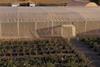
SQM’s trial seeks to grow the fruit in the Atacama Desert using adapted varieties, advanced irrigation and precision fertigation

SQM B

Image: SQM

One of Chile’s largest companies, Sociedad Química y Minera de Chile (SQM), says a project to develop year-round blueberry production in one of the country’s most arid regions is yielding promising results.

The initiative seeks to demonstrate the feasibility of producing commercial blueberries in the heart of the Atacama Desert, using adapted varieties, advanced irrigation systems, and precision fertigation.

In a letter published in Diario Estrategia, SQM’s deputy manager of social programmes, Atilio Narváez, wrote: “Every 8 July, the US celebrates Blueberry Day. In Chile, we wish to use this occasion to highlight an innovative project that SQM, together with communities from the Colonia Agrícola de Pintados, has developed in Pozo Almonte, in the Tarapacá region: a pilot programme that enables year-round blueberry production in the world’s most arid desert.

“We have evaluated 26 varieties using high-efficiency fertigation and microalgal biostimulants – in both open-field and shaded cultivation – to determine which genetics are best adapted to the desert environment.”

According to SQM, the results have been “remarkable”. The company claims to have achieved year-round production at the Orlando Ramos Agricultural Estate thanks to conditions developed in collaboration with the community and SQM’s expertise in precision agriculture, thereby opening up the possibility of supplying blueberries during the off-season.

“It is concrete proof that the desert, too, can bloom with crops that bring high value to local communities,” Narváez said.

The project is part of SQM’s Atacama Tierra Fértil”(Fertile Atacama Land) programme and is being carried out at the Colonia Agrícola Pintados in the municipality of Pozo Almonte (Tarapacá Region), very close to the Agricultural Research and Development Centre launched by the company in 2019 in partnership with the Pozo Almonte municipality.

Rather than establishing a large-scale commercial plantation, the goal is to validate the agronomic and economic viability of blueberries under extreme desert conditions and to offer a new production alternative for local farmers.

If the results are positive, SQM plans to study the potential for commercial scaling.

Although the environment in Pintados is extremely arid, it offers several interesting advantages for blueberry production. These include significant temperature fluctuations between day and night; very low disease pressure due to the dry climate; abundant solar radiation; and the good availability of groundwater, albeit requiring highly efficient management.

The project’s success hinges on overcoming water limitations through high-precision irrigation and fertigation technologies – an area where SQM possesses extensive experience thanks to its plant nutrition business.

The pilot was publicly launched in 2025 under the name Arándanos en el Desierto (Blueberries in the Desert). At that time, SQM explained that it was testing various genotypes with the aim of identifying those best adapted for future expansion.

Although it is more commonly associated with lithium mining, SQM remains a major player in the manufacture of specialty fertilisers. Its SQM Specialty Plant Nutrition division markets products for high-value crops, such as table grapes, citrus, berries, avocados, and vegetables, and has a commercial presence in more than 110 countries.