As export growth slows, country’s growers and exporters face up to container shortages, deteriorating infrastructure, and climate change
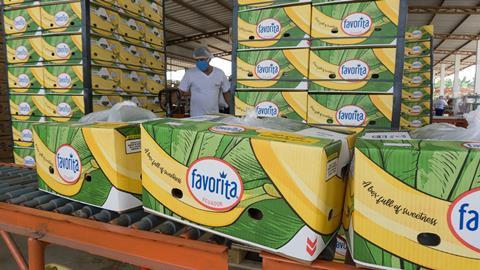
Ecuador’s banana export business faces an uncertain few months ahead, according to industry association AEBE.
In a statement, the group said a combination of shipping restrictions, geopolitical instability, and the imminent climate threat posed by a forecast strong El Niño would mean a “highly uncertain” second half of the year for both producers and exporters.
Ecuadorian banana exports reached a cumulative total of 149.26mn boxes for the year to end of April, compared with 140.93mn in the same period of the previous year, it noted.
During that time, the country has shipped an additional 50.32 million boxes to the EU (+14.7 per cent), 32.03mn more to Russia (+9.8 per cent), and 20mn more to the Middle East (+7.5 per cent).
But despite that 5.91 per cent incrase, equal to around 8.33mn additional boxes, the rate of growth has steadily declined each month, from 11.2 per cent in January.
‘Operational paradox’
April was marked by high fruit availability in the fields but low shipping capacity, AEBE continued.
“The shortage of refrigerated containers, changes in shipping routes, cargo shifting, and the effects of the conflict in the Middle East on key routes such as the Strait of Hormuz hampered the smooth flow of shipments,” it said.
“This was compounded by internal problems: deteriorating roads, insecurity on highways and in ports, and a lack of skilled labour on farms. The result was a product buildup, adjustments to the harvest schedule, and pressure on sales conditions.”
Between weeks 18 and 21, it noted, temperatures remained up to 1°C above 2025 levels.
The so-called ‘bagging indicator’, which anticipates future production, grew steadily, increasing from a year-on-year variation of 1.26 in week 18 to 4.64 in week 21.
“This greater production potential, however, failed to translate into increased exports due to shipping restrictions,” it added.
Climate alert
There is apparently also growing concern in the Ecuadorean banana business about the likely return of El Niño.
In response, the government has declared a yellow alert, introducing emergency measures in 17 of the country’s 24 provinces – including areas with a high concentration of banana plantations.
Previous El Niño episodes in 1982-1983 and 1997-1998 resulted in “large-scale flooding, severe infrastructure damage, and significant losses in agricultural production” the group observed.
“For the banana sector, which already operates under logistical pressure and with high costs, a strong El Niño would worsen field conditions, affect fruit quality, and jeopardise the continuity of shipments in the following months.”