New bulk packaging film protects fruit during extended storage and shipment
StepacPCC has developed a new packaging solution that preserves the freshness and appearance of pitaya (dragon fruit), aiding Ecuadorian exporters shipping to the US and Europe.
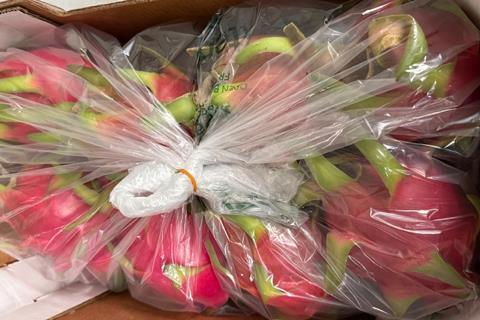
The company’s technical experts adapted its advanced Xtend modified atmosphere/modified humidity (MA/MH) bulk packaging films to accommodate the unique post-harvest requirements of pitaya so that the tropical fruit reaches customers in peak quality and appearance.
Pitaya is native to native to Central and South America and exporters from the region must contend with multiple challenges during sea shipment to destination markets around the world, a journey that can stretch to three weeks or more. High respiration rates, moisture loss, and susceptibility to microbial decay can all compromise fruit quality, beginning just days after harvest.p“South American pitaya growers often struggle to reach distant markets with this high-demand delicacy,” said Gary Ward, StepacPPC CTO.
“Even under optimal cold chain conditions, the long sea freight from Ecuador to North America and Europe takes its toll on the delicate fruit, resulting in weight loss, shrivelling of the skin and the bracts, a dulling of the characteristic brightly coloured peel, accompanied on occasion by microbial decay. These factors reduce the fruit’s appeal and marketability by the time it arrives at its destination. Most importantly, they negatively impact quality and freshness.”
The new packaging solution balances oxygen and carbon dioxide concentrations and provides moisture control to protect the fruit during extended storage and shipment. The packaging reduces dehydration, reduces the respiration rate of the fruit and inhibits microbial decay, thereby slowing fruit deterioration.
According to StepacPPC, its Xtend packaging is proving to be instrumental in preserving the vibrant colour and glossy appearance of the decorative pitaya, while preserving the firmness of the protruding bracts, which is a key indicator of quality and freshness that tends to curl and wilt when dehydrated. Development of the specialised film by StepacPPC’s global R&D team took over three years and involved frequent visits and close cooperation with pitaya exporters to fine-tune and optimise the post-harvest handling, packaging design, and overall performance of the new solution.
StepacPPC’s broad range of film structures all incorporate antifog properties and a range of water vapour transmission rates (WVTR). This enables precise moisture management tailored to specific produce requirements, balancing mitigation of microbial decay risk with prevention of excessive weight loss while maintaining product visibility.
“This breakthrough has created new opportunities for exporters, enabling them to reach more distant markets with fruit arriving in prime condition. This applies not only to Ecuador and South America but to other key producing regions, including South-East Asia—a major hub for the cultivation and export of dragon fruit,” added Ward.
“The success in Ecuador epitomises the way that StePacPPC identifies fresh produce pain points and then works with its customers to forge a new packaging paradigm.”