Company showcases latest genetic varieties focused on yield, resistance, and sustainability at 2026 Demo Days in Murcia
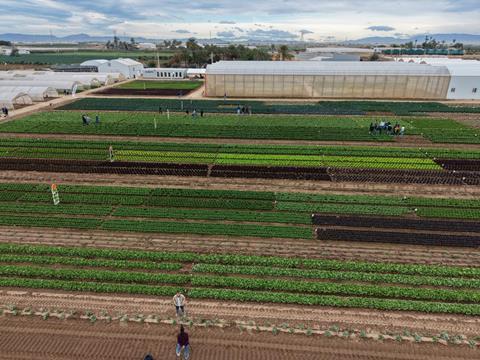
Growers, technicians and professionals from the vegetable sector visited Syngenta’s trial farm in La Puebla, Murcia for the company’s annual demonstration days for leafy and brassica crops. Over three days, they were able to learn firsthand about the latest advances in plant genetics applied to leafy and brassica crops.
Diego Diaz, brand and customer manager at Syngenta Vegetable Seeds for Europe, commented: “In a context marked by extreme weather events and the constant evolution of market demands, growers require innovation, knowledge, and reliable solutions that guarantee results from planting to harvest, more than just quality seeds”.
According to Syngenta, its new genetics presented stand out for their disease resistance, improved yield, superior quality and post-harvest shelf-life.
Among the brassica varieties that garnered the most attention from attendees were Galivan broccoli, an early-maturing variety suitable for both the fresh market and processing; and the Torres cauliflower, which Syngenta described as “having excellent head quality, with optimal compactness, weight, and colour for 110-120 day cycles”.
In lettuces, Syngenta highlighted Valerina, a mini romaine offering strong and reliable growth in autumn transplants; Yoannina, a romaine variety notable for its good performance against tip burn and its comprehensive resistance package; and the Ice Springo iceberg, providing reliable growth in spring crops, with excellent health and resistance.
The company also presented Miguelita, a red oak leaf babyleaf variety that combines high yield, superior texture, and a complete resistance package.
Luis Martín, director of Syngenta Vegetable Seeds for Southwest Europe, said: “During these days we have been able to demonstrate our commitment to continuous improvement and knowledge sharing. The response from producers has been excellent, and we have been able to show how our solutions, developed in close collaboration with local farmers, are precisely tailored to the specific challenges of each region”.