Heavy rain, wind, and port issues are disrupting exports from Morocco, Spain and South Africa, with berries and grapes among top affected
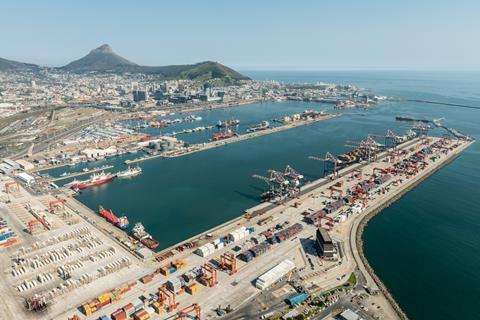
Heavy rains in southern Spain and Morocco, poor shipping conditions and ongoing issues at the port of Cape Town are leading to significant shortages and delays on imports of grapes and berries to the UK and Europe.
There are already shortages of berries on shelves this week due to heavy rains in Morocco holding up harvest, while videos show backlogs of trucks queuing to enter the port of Tangiers, which has been closed for four days.
In Spain, a heavy storm has hit berry producers in Murcia, with videos showing polytunnels destroyed and whole crops wiped out on some farms.
The disruption has been a major topic of conversation among leading fruit importers meeting at Fruit Logistica in Berlin this week, where suppliers of grapes, avocado, berries are at key seasonal moments.
A top talking point has been issues at the port of Cape Town, where winds typical in January and February have been compounded by poor quayside crane equipment, with reduced or halted operations at the port at a peak moment for South African grape exports.
Shipping lines have been choosing to skip Cape Town to make up time, according to some importers, while others have collected fruit only to be held up by poor shipping conditions.
“We are back to Covid-era when vessels are skipping ports to make up time,” one leading British fruit importer told FPJ. “That has had a knock-on effect on lack of boxes as there aren’t enough getting back to South Africa. Growers have fruit but nothing to pack it in.”
On grapes, one importer told FPJ that there are currently “lots of grapes bobbing around on the Bay of Biscay”. “Then they are likely to Rotterdam first before London Gateway so there is a further delay,” the importer said, adding that “we spend less time monitoring the quality of the fruit than we do the vessels.”
There are also some concerns around quality on grapes from South Africa, as in some cases there has been weak fruit because of climatic issues at source, with that fruit then delayed leading to further erosion on quality.
Neil Denny, of fruit importer Richard Hochfeld, said there is an “estimated 11 million boxes of grapes from South Africa currently to hit Europe in the next few weeks after hold ups on shipping. There’s a tsunami of grapes coming.
“It’s a feast to famine situation. But it’s well planned and there are promotions in place to deal with the volume,” he said.
Longer-term, the late window for grapes could see some shortages for retail customers. Hochfeld is one of those well placed to manage the situation due to 130 hectares of its own production in northern Chile, which fills the late season window for red seedless, Denny said. “Most fruit is contracted but there is some opportunity and we’ve had a busy show,” he said.
While rains have been causing havoc on berry production and logistics out of Spain, Spanish stonefruit producers are cautiously optimistic due to a high number of cold units over winter.
Tanguy Debiesse, of Spanish breeder-supplier Royal, said: “We are very excited because finally we had a real winter, with more cold units than in over 10 years. So the tree has rested and we believe the flowering will be more uniform.”
He said it’s too early to predict a start date for the season, which will begin in April, but rains are not causing a problem for the crop at this point.
Director of The Stonefruit Specialists, Shaun Hockey, said the last of the South African stonefruit harvest is currently being picked, with Egypt due to start the Northern Hemisphere season.
Speaking about the impact of rains in Spain, he said: “On the plus side all the dams are full and it’s raining not frost. If it carries on raining, then the roots get sodden and the sugars might not reach optimum levels.”
Several importers speaking to FPJ in Berlin about the current challenges in supply pointed to climate change as now visible in real-time. “We now have two to three core weather events a year, that’s the reality,” one major supplier said.


