As the issue of waste continues to overwhelm local systems, the UK Packaging Pact aims to transform the whole UK packaging system into a sustainable operation through coordinated action
The UK Packaging Pact was officially launched this week at an event bringing together businesses, government and experts and marking the start of a ten-year programme. Crucially, founding signatories to the Pact include the major supermarket chains in the UK.
The aim of the Pact, according to global environmental action NGO Wrap, is to transform the UK’s packaging system into a sustainable operation through coordinated action across multiple sectors.
Wrap CEO Catherine David commented: “The UK Packaging Pact is a unique, complete system approach to unlocking packaging transitions across the value chain. No other programme brings together the key players needed to deliver the enormous changes we must make. Policies are essential, but they alone cannot deliver and the Packaging Pact will deliver the practical change necessary through a flexible framework allowing signatories to focus on the actions most important to them.”

Wrap has developed the new cross-sector agreement to “help industry manage costs and address the part packaging plays in this growing perfect storm”.
The Pact builds on its predecessor, the UK Plastics Pact, widening its scope to cover every packaging material on the market, including glass, paper, card and metal, as well as plastics and bio-based materials.
“Today, we begin to unlock progress, to reduce business costs, to mitigate against risks, and to prepare for the future,” said David. “In the UK Packaging Pact, we offer an exclusive mechanism to create workable policies to deliver the circularity outcomes needed by businesses and government – and crucially, the planet.”
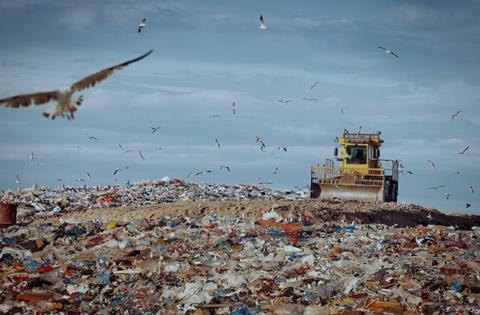
The launch follows the World Bank’s third What a Waste (3.0) report, which includes a warning that waste generation is outpacing population growth and the capacity of local systems to cope. A business-as-usual approach, the report stated, could mean global waste spirals to 3.86bn tonnes by 2050, a 50 per cent increase.
“At a time of major regulatory change with the Packaging and Packaging Waste Regulations, Extended Producer Responsibility, Deposit Return Scheme and Simpler Recycling, the UK Packaging Pact will help businesses and regulators by ensuring reforms are effective, helping to future-proof businesses by driving down business costs, and helping advise governments on the evolution of policy,” Wrap stated.
The UK Packaging Pact has four interconnected goals: to optimise packaging, to scale up reuse and refill, to support infrastructure investment and to harmonise data.
Through pre-competitive collaboration, Wrap said signatories would be able to lower costs and EPR fees via smarter design and material reduction, slash greenhouse gas emissions, prepare for and comply with evolving UK and EU regulation, and identify and unlock opportunities for reuse and recycling infrastructure investment.