Company says it will increase its use of robotics and invest in R&D as it develops distribution across US and Canada

Strawberry vertical farm operator Oishii says it plans to expand its year-round production capacity, invest in robotics, develop new product formats, and invest in R&D after it secured US$150mn in new Series C funding.
The company, which claims to operate the world’s largest indoor vertical strawberry farm in the US state of New Jersey, has adopted a “more focused” approach in recent years, as interest in the vertical farming sector has cooled.
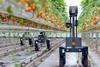
This includes the increased use of robotics and automation to scale up its production, particularly following last year’s acquisition of Tortuga AgTech and the recent signing of a strategic partnership with components specialist Misumi Group.
It also hopes to advance its R&D capabilities in Japan through the development of its Tokyo-based Open Innovation Center.
And it says it has expanded its distribution across 18 US states and in Toronto – its first international retail market – by introducing new retail formats and product offerings.
“Since our Series A investment in 2019, we have continuously supported Oishii Farm’s growth,” says Shuhei Abe, president & CEO of Sparx Asset Management, which led the latest financing round.
“It is truly inspiring to see the vision we shared at that time steadily becoming a reality, as the company advances seamlessly from research and development to proof of concept and commercialisation.”
He added: “One of the company’s key strengths lies in its exceptional execution capability, which has enabled rapid technological advancement. As Oishii Farm enters a new phase with the establishment of its Open Innovation Center in Japan, we look forward to continuing to support its growth.”
Greater flexibility
Oishii has expanded beyond its original, ultra-premium positioning to create what it describes as a “more flexible retail business with broader consumer reach”.
In 2018, its Omakase berries retailed at nearly US$50 per tray. Since then, however, the company has added two new berries, Koyo and Nikko, and introduced pack sizes and retail formats at prices ranging from US$5 to $15.
Earlier this year, the company introduced top-seal packaging for Nikko berries to extend their shelf-life and reduce the amount of plastic used by 80 per cent compared with traditional clamshell packs.
Oishii’s co-founder and CEO, Hiroki Koga, says that when the company chose to work with strawberries, it knew it was taking on one of indoor farming’s toughest challenges.
“They require precision at every stage, from pollination and harvesting to freshness and shelf-life, and there were moments along the way where solving one challenge revealed the next one underneath it,” he reflects. “This funding marks a new phase for Oishii as we scale what we’ve built, with deeper confidence in the decisions we’ve made and the role we can play in bringing high-quality produce to more people.”