Egypt’s strategic location has seen the country become an important link for fresh produce between the Mediterranean and the crisis-hit Gulf

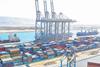
DP World Sokhna Port Egypt

Egypt’s Sokhna Port (Photo: DP World)

Egypt has emerged as a country that others turn to when supply issues arise. In recent years, Egypt has become the leading exporter of fresh oranges, and has kept pace with the growing global juice market by expanding its orange juice factories to bridge any gap in supply.

Adverse weather conditions in Morocco and Spain disrupted berry supplies to Europe this winter, with buyers turning to Egypt for increased demand.

Moreover, Egypt’s location has enabled its suppliers to deliver fresh produce like grapes to European markets within days: two to southern Turkey, four to five for southern Europe, and a maximum of 12 days to north European ports like Rotterdam.

Logistical issues from South Africa have seen Egypt become the top exporter of fresh grapes to countries including Finland, with shipments doubling in 2025, according to EastFruit.

Egyptian grapes

Due to the situation in the Gulf, Egypt has emerged as an indispensable hub for trans-shipments to Gulf countries like Saudi Arabia, Qatar, Bahrain, UAE, Kuwait, Oman and Iraq via a combination of sea and road.

“Companies have always transported produce from Egypt across the Red Sea, then to Saudi Arabia and other Gulf countries,” Gadco Egypt’s Ibrahim Gad told Fruitnet. “But the increase in demand has been notable since the Gulf crisis. This vital corridor cannot be ignored.”

According to Gad, produce is also reaching markets including Jordan and Iraq via Nuweiba Port on the Gulf of Aqaba, in Egypt’s Sinai Peninsula, before continuing the journey by road.

“The majority of fresh produce from Egypt to Saudi Arabia is sent from ports like Safaga to Dubba in Saudi Arabia via the Red Sea, then by road to all other Gulf countries,” he said. “Saudi Arabia imports around 200,000-300,000 tonnes of citrus from Egypt in an average year. The majority arrives via multimodal transport, and from there goes to Gulf markets by road, not via the Strait of Hormuz.”

Gad said that RoRo vessels are also operating from Egyptian ports to the port of Trieste in northeast Italy, and from there the produce goes to other European countries via land.

The key advantage for Egypt remains, of course, the connecting passage that is Suez. “With the Suez Canal, Egypt’s unique location offers the potential for ports both in the north and on the Red Sea to serve as a hub comparable to Koper, Trieste or Rotterdam in Europe,” said Gad.